Que: ENSO is one of the most important climate phenomena on Earth due to its ability to change the global atmospheric circulation. Explain the phenomenon of El Niño Southern Oscillation (ENSO). Write a short note on Oceanic Nino index (ONI).
(GS 1, 10 Marks, 150 Words)
प्रश्न. ENSO वैश्विक वायुमंडलीय परिसंचरण को बदलने की अपनी क्षमता के कारण पृथ्वी पर सबसे महत्वपूर्ण जलवायु घटनाओं में से एक है। एल नीनो दक्षिणी दोलन (ENSO) की घटना की व्याख्या करें। महासागरीय नीनो सूचकांक (ONI) पर एक संक्षिप्त टिप्पणी लिखें।
(जीएस 1, 10 अंक, 150 शब्द)
Approach:
-
Introduction: Define ENSO
-
Body: Write phases of ENSO; Oceanic Nino index (ONI)
-
Conclusion: Summarise the answer
Introduction:
El Niño-Southern Oscillation (ENSO) is a recurring climate pattern involving changes in the temperature of waters in the central and eastern tropical Pacific Ocean. On periods ranging from about three to seven years, the surface waters across a large swath of the tropical Pacific Ocean warm or cool by anywhere from 1°C to 3°C, compared to normal.
This oscillating warming and cooling pattern, referred to as the ENSO cycle, directly affects rainfall distribution in the tropics and can have a strong influence on weather conditions in India and other parts of the world.
Phases of ENSO
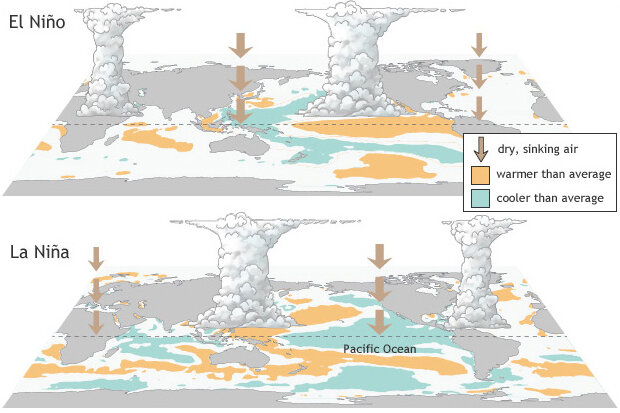
El Niño and La Niña are the extreme phases of the ENSO cycle; between these two phases is a third phase called ENSO-neutral.
El Niño and La Niña, require certain changes in both the ocean and the atmosphere because ENSO is a coupled climate phenomenon. Neutral is in the middle of the continuum.
-
El Niño (Warm Phase)
-
A warming of the ocean surface, or above-average sea surface temperatures (SST), in the central and eastern tropical Pacific Ocean.
-
It weakens the easterly trade winds leading to weakening of monsoon over the Indian sub-continent. This results in drought like conditions and intense heatwaves.
-
-
La Niña (Cool Phase)
-
A cooling of the ocean surface, or below-average sea surface temperatures (SST), in the central and eastern tropical Pacific Ocean.
-
It strengthens the easterly trade winds leading to a stronger monsoon over the Indian sub-continent. This results in flood like conditions.
-
-
Neutral: Neither El Niño or La Niña. Often tropical Pacific SSTs are generally close to average.
Oceanic Nino index (ONI)
-
The Oceanic Niño Index (ONI) is United States’ National Oceanic and Atmospheric Administration (NOAA)'s primary index for tracking the ocean part of ENSO.
-
The ONI is the rolling 3-month average temperature anomaly—difference from average—in the surface waters of the east-central tropical Pacific, near the International Dateline.
-
Index values of +0.5 or higher indicate El Niño. Values of -0.5 or lower indicate La Niña.
Conclusion:
ENSO shifts irregularly back and forth between El Niño and La Niña every two to seven years. Each phase triggers predictable disruptions of temperature, precipitation, and winds in the tropical Pacific Ocean. These changes disrupt the large-scale air movements in the tropics, which triggers a cascade of global side effects.
दृष्टिकोण:
-
परिचय: एल नीनो-दक्षिणी दोलन (ENSO) को परिभाषित करें।
-
मुख्य भाग: एल नीनो-दक्षिणी दोलन (ENSO) के चरण; महासागरीय नीनो सूचकांक (ONI) ।
-
निष्कर्ष: उत्तर को संक्षेप में लिखें।
परिचय:
एल नीनो-दक्षिणी दोलन (ENSO) एक आवर्ती जलवायु पैटर्न है जिसमें मध्य और पूर्वी उष्णकटिबंधीय प्रशांत महासागर में पानी के तापमान में परिवर्तन शामिल है। लगभग तीन से सात वर्षों की अवधि में, उष्णकटिबंधीय प्रशांत महासागर के एक बड़े हिस्से में सतही जल सामान्य की तुलना में 1°C से 3°C तक गर्म या ठंडा हो जाता है।
यह दोलनशील गर्म होने और ठंडा होने का पैटर्न, जिसे ENSO चक्र कहा जाता है, उष्णकटिबंधीय क्षेत्रों में वर्षा वितरण को सीधे प्रभावित करता है और भारत तथा विश्व के अन्य भागों में मौसम की स्थिति पर इसका गहरा प्रभाव हो सकता है।
एल नीनो-दक्षिणी दोलन (ENSO) के चरण:
एल नीनो और ला नीना ENSO चक्र के चरम चरण हैं; इन दो चरणों के बीच एक तीसरा चरण होता है जिसे ENSO-न्यूट्रल कहा जाता है।
एल नीनो और ला नीना के लिए महासागर और वायुमंडल दोनों में कुछ बदलावों की आवश्यकता होती है क्योंकि ENSO एक युग्मित जलवायु घटना है। तटस्थ सातत्य के बीच में होता है।
-
अल नीनो (गर्म चरण)
-
मध्य और पूर्वी उष्णकटिबंधीय प्रशांत महासागर में समुद्र की सतह का गर्म होना, या औसत से अधिक समुद्री सतह का तापमान (SST)।
-
यह पूर्वी व्यापारिक हवाओं को कमजोर करता है, जिससे भारतीय उपमहाद्वीप में मानसून कमजोर हो जाता है। इसके परिणामस्वरूप सूखे जैसी स्थिति और तीव्र गर्मी की लहरें पैदा होती हैं।
-
-
ला नीना (शीत चरण)
-
मध्य और पूर्वी उष्णकटिबंधीय प्रशांत महासागर में समुद्र की सतह का ठंडा होना, या औसत से कम समुद्री सतह का तापमान (SST)।
-
यह पूर्वी व्यापारिक हवाओं को मजबूत करता है जिससे भारतीय उपमहाद्वीप पर मानसून मजबूत होता है। इसके परिणामस्वरूप बाढ़ जैसी स्थिति पैदा होती है।
-
-
तटस्थ: न तो एल नीनो और न ही ला नीना। अक्सर उष्णकटिबंधीय प्रशांत महासागरीय तापमान सूचकांक आम तौर पर औसत के करीब होते हैं।
महासागरीय नीनो सूचकांक (ONI)
-
महासागरीय नीनो सूचकांक (ONI) संयुक्त राज्य अमेरिका के राष्ट्रीय महासागरीय एवं वायुमंडलीय प्रशासन (NOAA) का ENSO के महासागरीय भाग पर नज़र रखने के लिए प्राथमिक सूचकांक है।
-
ONI अंतर्राष्ट्रीय तिथि रेखा के पास पूर्व-मध्य उष्णकटिबंधीय प्रशांत के सतही जल में औसत से भिन्न 3 महीने का औसत तापमान विसंगति है।
-
+0.5 या उससे अधिक के सूचकांक मान एल नीनो को इंगित करते हैं। -0.5 या उससे कम के मान ला नीना को इंगित करते हैं।
निष्कर्ष:
एल नीनो-दक्षिणी दोलन (ENSO) हर दो से सात साल में अनियमित रूप से एल नीनो और ला नीना के बीच आगे-पीछे होता रहता है। प्रत्येक चरण उष्णकटिबंधीय प्रशांत महासागर में तापमान, वर्षा और हवाओं के पूर्वानुमानित व्यवधानों को ट्रिगर करता है। ये परिवर्तन उष्णकटिबंधीय क्षेत्रों में बड़े पैमाने पर वायु संचलनों को बाधित करते हैं, जो वैश्विक दुष्प्रभावों की एक श्रृंखला को ट्रिगर करता है।
Note:
1. Rename PDF file with your NAME and DATE, then upload it on the website to avoid any technical issues.
2. Kindly upload only a scanned PDF copy of your answer. Simple photographs of the answer will not be evaluated!
3. Write your NAME at the top of the answer sheet. Answer sheets without NAME will not be evaluated, in any case.
Choose Your Medium:

Submit your answer