Article 1: Hantavirus Outbreak
Why in News: A suspected outbreak of Hantavirus Infection on a cruise ship near Cape Verde has led to deaths and quarantine measures, raising concerns about emerging infectious diseases and global health preparedness.
Key Details
- A cruise ship carrying international passengers reported suspected hantavirus infections. Several deaths and multiple symptomatic cases have triggered emergency medical response and evacuation efforts.
- Around 150 passengers remain quarantined onboard due to infection risk. This highlights the vulnerability of closed environments like ships to disease outbreaks.
- Authorities denied docking permission to prevent spread within national territory. This reflects the importance of preventive containment measures in public health emergencies.
- The incident underscores the global risk posed by zoonotic diseases. It also shows the need for international coordination in disease surveillance and response.
About Hantavirus
- Nature of Disease: Hantavirus Infection is a group of viruses transmitted primarily through rodents. It causes severe illnesses affecting lungs or kidneys, depending on the strain.
- Origin: The virus was first identified near the Hantan River in South Korea in the 1970s. The name “Hantavirus” is derived from this geographical origin.
- Types of Illness: It causes Hantavirus Pulmonary Syndrome (HPS) and Hemorrhagic Fever with Renal Syndrome (HFRS). Both conditions have high fatality rates if not treated early.
- Global Occurrence: Cases are reported in Asia, Europe, and the Americas. It is considered a rare but potentially deadly infectious disease worldwide.
Mode of Transmission
- Rodent-Borne Disease: The virus spreads through contact with infected rodent urine, droppings, or saliva. Humans get infected when contaminated particles become airborne and are inhaled.
- Limited Human Transmission: Person-to-person transmission is extremely rare. This reduces the risk of large-scale pandemics compared to airborne viruses like COVID-19.
- Environmental Factors: Poor sanitation and rodent infestation increase infection risk. Rural and forested areas are more vulnerable to outbreaks.
- High-Risk Groups: Farmers, campers, and people in rodent-prone areas are at greater risk. Occupational exposure plays a significant role in transmission.
Symptoms and Clinical Features
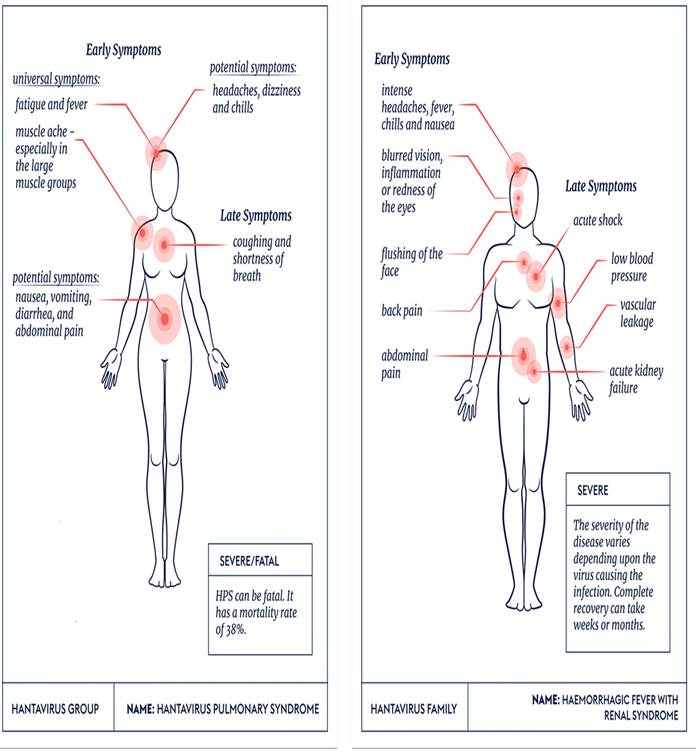
- Early Symptoms: Fever, fatigue, muscle aches, and headaches are common. These symptoms resemble flu, making early diagnosis difficult.
- Advanced Symptoms: Severe coughing and shortness of breath develop later. Fluid accumulation in lungs can lead to respiratory failure.
- Disease Progression: Symptoms worsen within 4–10 days after infection. Early medical attention is critical to reduce fatality risk.
- Fatality Rate: Hantavirus infections can have mortality rates of 30–40%. This makes it one of the more dangerous zoonotic diseases.
Treatment and Prevention
- No Specific Cure: There is no targeted antiviral treatment available. Management focuses on supportive care like oxygen therapy and hydration.
- Early Detection: Early hospitalisation improves survival chances significantly. Delay in treatment often leads to severe complications.
- Preventive Measures: Avoiding contact with rodents and maintaining hygiene is essential. Use of protective gear in high-risk areas reduces exposure.
- Public Awareness: Awareness campaigns are crucial to prevent outbreaks. Education about transmission and symptoms can save lives.
Public Health Response and Governance
- Containment Measures: Quarantine and travel restrictions are key strategies. These help prevent spread across borders and populations.
- Role of WHO: The World Health Organization monitors outbreaks and provides guidelines. It assesses risk levels and supports countries in response efforts.
- International Coordination: Cross-border cooperation is essential in disease control. Global health security depends on timely information sharing.
- Preparedness Gaps: Many countries lack rapid response systems for rare diseases. This highlights the need for strengthening health infrastructure.
Zoonotic Diseases
- Definition: Zoonotic diseases are infections transmitted from animals to humans. Examples include Ebola, Nipah, and COVID-19.
- Rising Trend: Increased human-animal interaction is driving new disease emergence. Urbanisation and deforestation contribute to this trend.
- Global Health Concern: Zoonotic diseases pose major threats to public health systems. They can disrupt economies and global mobility.
- India’s Context: India faces risks due to biodiversity and population density. Strengthening surveillance and healthcare systems is crucial.
Way Forward
- Strengthening Surveillance: Improve early detection systems for zoonotic diseases. This will help in timely containment and response.
- Research and Development: Invest in vaccines and antiviral treatments. Innovation is key to tackling emerging health threats.
- Public Health Infrastructure: Enhance hospital capacity and emergency preparedness. Robust systems reduce mortality and economic impact.
- Global Cooperation: Promote international collaboration in disease monitoring.nCollective action is essential for global health security.
Conclusion
The hantavirus outbreak highlights the persistent threat of zoonotic diseases in a globalised world. Strengthening surveillance, preparedness, and international cooperation is essential to prevent such outbreaks from escalating into major health crises.
EXPECTED QUESTIONS FOR UPSC CSE
Prelims MCQ
Q. Which of the following are zoonotic diseases?
- Hantavirus
- Nipah Virus
- Tuberculosis
- Ebola
Select the correct answer:
(a) 1, 2 and 4 only
(b) 2 and 3 only
(c) 1 and 3 only
(d) 1, 2, 3 and 4
Answer: (a)
Descriptive Question
Q. “Zoonotic diseases are emerging as a major global health challenge.” Discuss in the context of recent outbreaks like hantavirus. Also suggest measures to strengthen public health preparedness. (250 words, 15 marks)