Article 1: Buddha Purnima, Relic Diplomacy
Why in News: The sacred exposition of the Piprahwa relics of Gautama Buddha in Ladakh on the occasion of Buddha Purnima highlights India’s cultural heritage, Buddhist diplomacy, and the revival of spiritual tourism.
Key Details
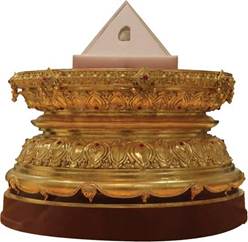
- Ladakh is hosting a two-week-long public exposition of Buddha relics along the Indus River in Leh. This is the first time these relics are being displayed in India for public veneration under government initiative.
- The relics were originally discovered at Piprahwa and are believed to be associated with the Buddha’s mortal remains. Their return to India in 2025 marks an important step in cultural restitution and heritage preservation.
- The event reflects India’s identity as the birthplace of Buddhism and a centre of ancient spiritual traditions. It also reinforces Ladakh’s importance in the global Buddhist cultural landscape.
- The exposition is expected to promote spiritual tourism and strengthen India’s soft power globally. Such events attract international Buddhist communities and enhance cultural diplomacy.
Buddhism in India
- Origin of Buddhism: Buddhism originated in India in the 6th century BCE with the teachings of Gautama Buddha. It emerged as a reform movement against ritualism and emphasised ethical living and compassion.
- Core Teachings: Concepts like the Four Noble Truths and Eightfold Path guide individuals towards liberation. These teachings promote moderation, non-violence, and mental discipline.
- Spread of Buddhism: Buddhism spread across Asia through trade routes and royal patronage. It became a major cultural and religious force in regions like Sri Lanka, China, Japan, and Southeast Asia.
- Decline in India: Over time, Buddhism declined due to socio-political changes and revival of other traditions. However, its legacy continues through monuments, philosophy, and global influence.
Relic Tradition in Buddhism
- Mahaparinirvana Concept: After the Buddha’s death, his relics were divided among different rulers. These relics became sacred objects of worship and reverence.
- Stupa Culture: Relics were enshrined in stupas, which became important pilgrimage sites. Stupas symbolise the Buddha’s presence and spiritual enlightenment.
- Ashokan Contribution: Ashoka redistributed relics across his empire. This led to the widespread construction of stupas and expansion of Buddhism.
- Global Spread: The tradition of relic veneration spread across Asia over centuries. Today, relics are preserved in countries like Thailand, Sri Lanka, and Japan.
Piprahwa Relics and Historical Significance
- Discovery: The relics were discovered in the 1890s by William Claxton Peppé at Piprahwa. Excavation revealed urns with inscriptions linking them to the Buddha’s Sakya clan.
- Archaeological Evidence: The Brahmi inscription confirms the authenticity of the relics. It provides crucial historical validation of early Buddhist practices.
- Colonial Context: Many relics were taken abroad during colonial times. This reflects issues of cultural appropriation and heritage displacement.
- Repatriation: India successfully brought back part of these relics in 2025. This marks an important achievement in preserving national heritage.
Ladakh as a Buddhist Cultural Hub
- Geographical Importance: Ladakh lies along ancient trade routes connecting India with Central Asia. This facilitated the spread of Buddhism and cultural exchange.
- Monastic Tradition: The region is home to ancient monasteries and stupas. These institutions preserve Buddhist teachings and traditions.
- Archaeological Heritage: Sites like Mulbekh Maitreya and Sani Stupa reflect early Buddhist influence. They provide insights into the region’s historical and cultural evolution.
- Modern Relevance: Ladakh continues to be a centre of Buddhist practice and pilgrimage. The current exposition strengthens its global cultural identity.
Cultural Diplomacy and Soft Power
- Soft Power Concept: Cultural heritage and traditions enhance a country’s global influence. India uses Buddhism as a tool for diplomatic engagement with Asian countries.
- Buddhist Diplomacy: Shared Buddhist heritage strengthens ties with countries like Sri Lanka and Japan. It promotes mutual understanding and cooperation.
- Global Engagement: Hosting relic exhibitions attracts international attention. It positions India as a cultural and spiritual leader.
- Strategic Importance: Cultural diplomacy complements economic and political relations. It helps build long-term partnerships based on shared values.
Spiritual Tourism and Economic Potential
- Tourism Growth: Religious and spiritual tourism is a rapidly growing sector in India. It generates employment and boosts local economies.
- Ladakh’s Potential: The region can emerge as a major Buddhist tourism destination. This will attract both domestic and international visitors.
- Infrastructure Needs: Improved connectivity and facilities are required to support tourism. Sustainable development is essential to preserve ecological balance.
- Community Benefits: Tourism provides livelihood opportunities for local communities. It also helps preserve cultural traditions and heritage.
Teachings of Buddha and Contemporary Relevance
- Middle Path: Buddha advocated moderation and balance in life. This principle is relevant in addressing modern societal conflicts.
- Impermanence (Anitya): Everything is transient and subject to change. This idea helps individuals cope with uncertainty and change.
- Compassion and Peace: Emphasis on non-violence and empathy. These values are crucial in a conflict-prone world.
- Universal Brotherhood: Promotes harmony and coexistence among all beings. It aligns with global ideals of peace and cooperation.
Way Forward
- Heritage Preservation: Strengthen efforts to protect and restore cultural assets. This ensures continuity of historical legacy.
- Promotion of Cultural Tourism: Develop Ladakh as a global spiritual destination. This requires integrated planning and marketing strategies.
- Global Collaboration: Engage with Buddhist countries for cultural exchange programmes. This will enhance India’s soft power and global presence.
- Awareness and Education: Promote knowledge about Buddhist heritage and values. This can foster social harmony and cultural pride.
Conclusion
The arrival of the Piprahwa relics in Ladakh is not just a cultural event but a symbol of India’s civilisational heritage. It reinforces the relevance of Buddha’s teachings in today’s world and highlights the role of cultural diplomacy in strengthening global ties.
EXPECTED QUESTION FOR UPSC CSE
Prelims MCQ
Q. With reference to Buddhism and relic traditions, consider the following statements:
- The tradition of relic worship in Buddhism began after the Mahaparinirvana of the Buddha.
- Emperor Ashoka played no role in the spread of Buddhist relics.
- Stupas were constructed to enshrine relics and serve as pilgrimage sites.
How many of the above statements are incorrect?
(a) Only one
(b) Only two
(c) All three
(d) None
Answer: a (1 only)