MODERN INDIAN PAINTINGS
Modern Indian painting came into existence during the period of the British rule in India as a result of migration of some European painters. Oil colours were used in these modern paintings.
Company School/ Patna School/ Kasim Bazaar School
This branch of modern Indian paintings was characterized by predominance of European themes. Scenes from the life of Jesus Christ and European buildings were portrayed.
Patna and Kasim Bazaar (Bihar) were its main centres. William Reynolds, George Chinnery and Emile Eden were associated European painters. Later on Amrita Sher-Gill and Raja Ravi Varma were also associated with this school.
Bengal School of Art
• This School emerged at the end of 19th century when the nationalist movement commenced. Bengal was the main centre as it was the home of the strongest spirit of nationalism.
• Bharat Mata painting made by Abanindranath Tagore is the finest creation of this school. Paintings were made to inspire the Indian nationalists busy in their struggle against British rule. Gajendranath Tagore, Nandalal Bose and Jemini Roy were other famous painters belonging to this school. It is also known as Shanti Niketan School and Nationalist school.
Bazaar Paintings
• This school was also influenced by the European encounter in India. They were different from the Company paintings as that school mixed European techniques and themes with Indian ones. The Bazaar school did not take any Indian influence but adopted the Roman and Greek influence.
• They made the painters to copy the Greek and Roman statues. This school was prevalent in Bengal and Bihar region. Apart from the Greco-roman heritage, they made paintings of everyday bazaar that showed Indian bazaars with European background. One of the most famous genres was depiction of Indian courtesans dancing before the British officials. They also painted religious themes but the figures of Indian Gods and Goddesses with more than two axes and elephant faces like that of Lord Ganesha were prohibited as they deviated from the European notion of natural human figurine.
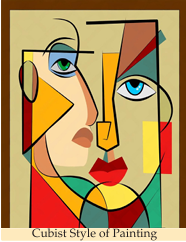
Cubist Style of Painting
• Painting’s cubist trend was influenced the by European Cubist movement. The artefacts were broken, analysed and then reassembled in this method. Through the use of abstract art forms, the artist rebuilt this process on the painting. They attempted to attain the ideal balance of line and colour.
• M.F Hussain, who created the ‘Personification of Romance’ series of paintings, was one of India's most popular cubist artists.