Reproduction: Reproduction is the biological process by which new individuals, or children, are created from their parents.
Types of Reproduction
There are two methods for animals to procreate. These are the two methods of reproduction: 1. sexual and 2. asexual.
Sexual Reproduction: Animals have different reproductive organs or parts for males and females. Animal reproductive organs similarly create gametes, which combine to form zygotes. The zygote is the one that becomes a new individual. Sexual reproduction is the process of creating offspring by fusing male and female gametes.
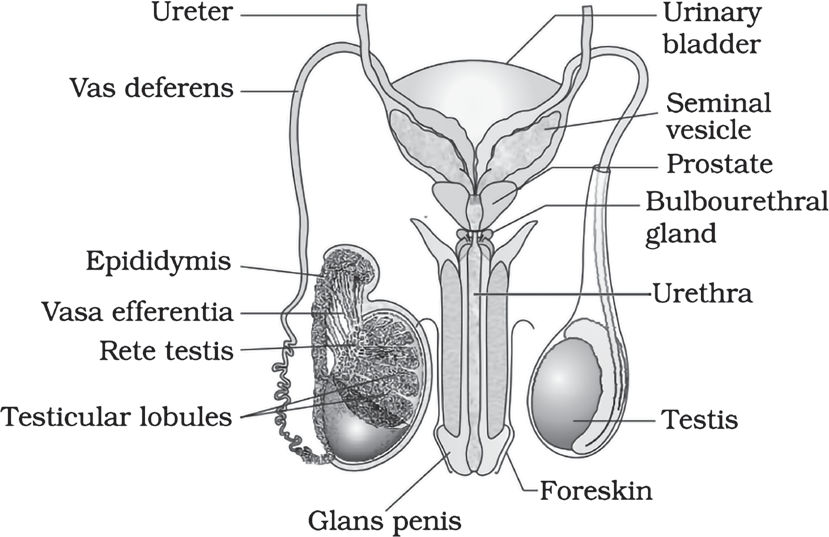
Diagrammatic view of male reproductive system (part of testis is open to show inner details
Asexual Reproduction: Asexual reproduction is the kind of reproduction in which only one parent participates.
Hydra produce new individuals from buds. We refer to this asexual reproductive process as budding.
Amoeba divides itself into two in order to reproduce. We refer to this kind of asexual reproduction as binary fission.
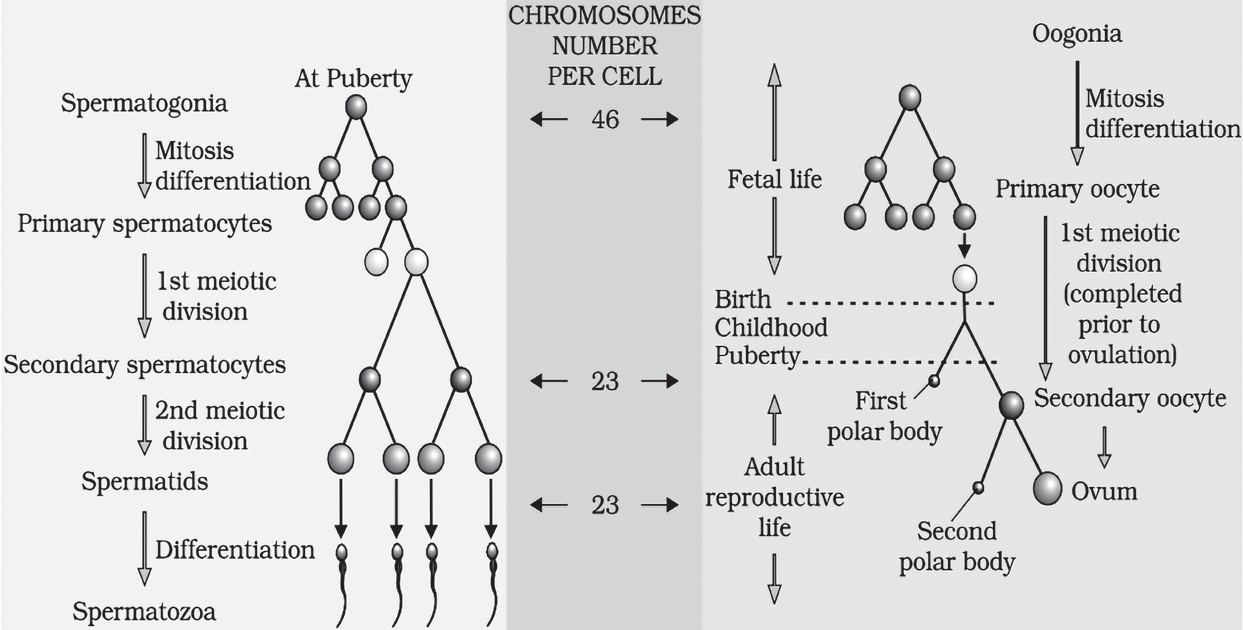
Humans are sexually reproducing and viviparous (development of the zygote happens within the body and not outside in an egg). The male reproductive system is composed of a pair of testes, the male sex accessory ducts and the accessory glands and external genitalia. Each testis has about 250 compartments called testicular lobules, and each lobule contains one to three highly coiled seminiferous tubules. Each seminiferous tubule is lined inside by spermatogonia and Sertoli cells. The spermatogonia undergo meiotic divisions leading to sperm formation, while Sertoli cells provide nutrition to the dividing germ cells. The Leydig cells outside the seminiferous tubules, synthesise and secrete testicular hormones called androgens. The male external genitalia is called penis.
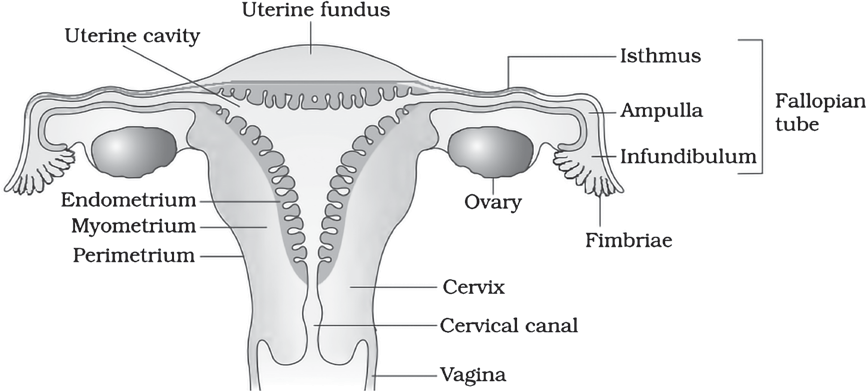
Diagrammatic sectional view of the female reproductive system
The female reproductive system consists of a pair of ovaries, a pair of oviducts, a uterus, a vagina, external genitalia, and a pair of mammary glands. The ovaries produce the female gamete (ovum) and some steroid hormones (ovarian hormones). Ovarian follicles in different stages of development are embedded in the stroma. The oviducts, uterus and vagina are female accessory ducts. The uterus has three layers namely perimetrium, myometrium and endometrium. The female external genitalia includes: mons pubis, labia majora, labia minora, hymen and clitoris. The mammary glands are one of the female secondary sexual characteristics. Spermatogenesis results in the formation of sperms that are transported by the male sex accessory ducts. A normal human sperm is composed of a head, neck, a middle piece and tail. The process of formation of mature female gametes is called oogenesis. The reproductive cycle of female primates is called menstrual cycle. Menstrual cycle starts only after attaining sexual maturation (puberty). During ovulation only one ovum is released per menstrual cycle. The cyclical changes in the ovary and the uterus during menstrual cycle are induced by changes in the levels of pituitary and ovarian hormones. After coitus, sperms are transported to the junction of the isthmus and ampulla, where the sperm fertilises, the ovum leading to formation of a diploid zygote. The presence of X or Y chromosome in the sperm determines the sex of the embryo. The zygote undergoes repeated mitotic division to form a blastocyst, which is implanted in the uterus resulting in pregnancy. After nine months of pregnancy, the fully developed foetus is ready for delivery. The process of childbirth is called parturition which is induced by a complex neuroendocrine mechanism involving cortisol, estrogens and oxytocin. Mammary glands differentiate during pregnancy and secrete milk after child-birth. The new-born baby is fed milk by the mother (lactation) during the initial few months of growth.