SPACE EXPLORATION
Chandrayaan 1
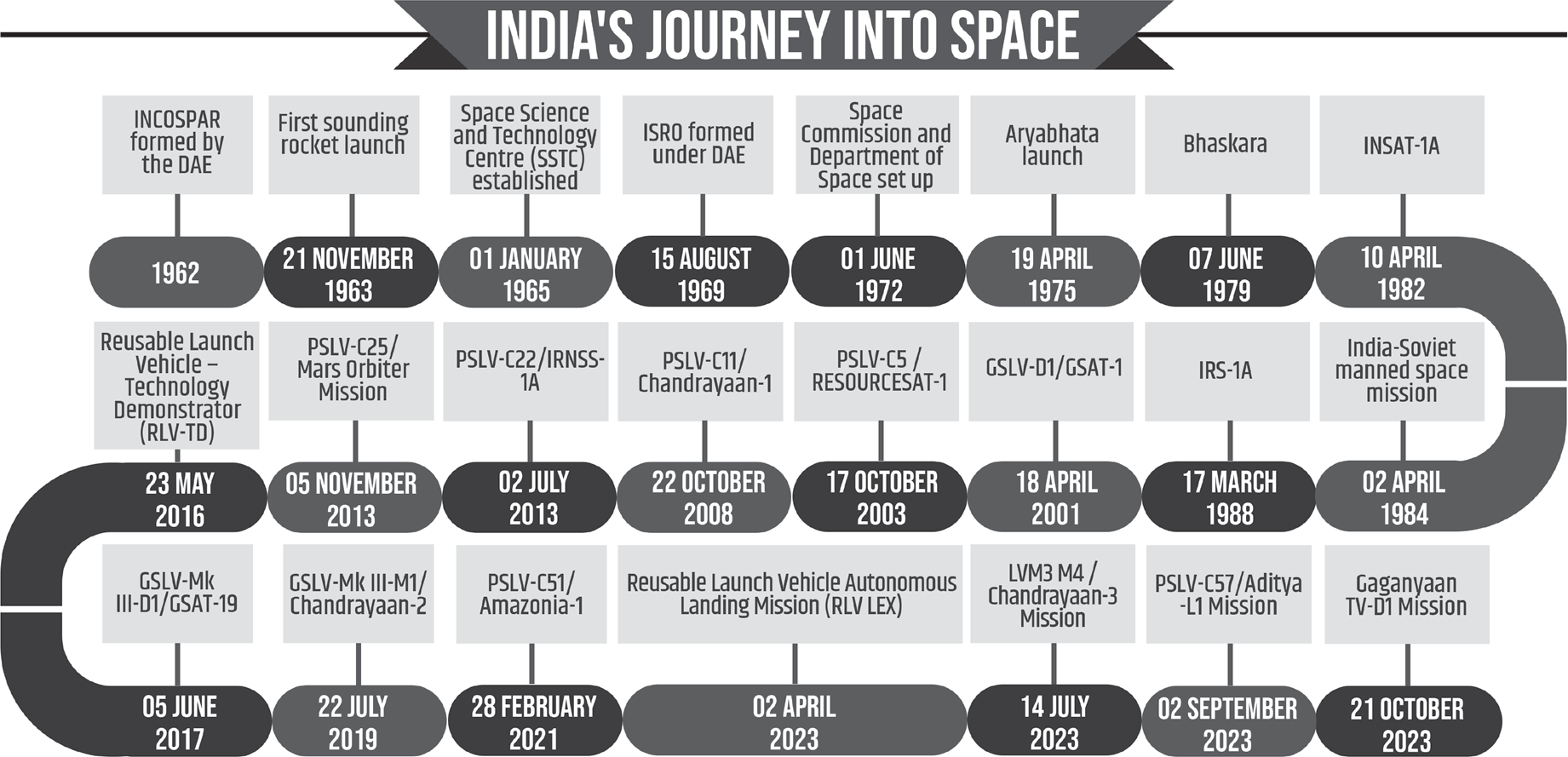
Chandrayaan-1, India’s first mission to Moon, was launched successfully on October 22, 2008 from SDSC SHAR, Sriharikota. The spacecraft was orbiting around the Moon
at a height of 100 km from the lunar surface for chemical, mineralogical and photo-geologic mapping of the Moon. The spacecraft carried 11 scientific instruments built in India, USA, UK, Germany, Sweden and Bulgaria.
After the successful completion of all the major mission objectives, the orbit has been raised to 200 km during May 2009. The satellite made more than 3400 orbits around the moon and the mission was concluded when the communication with the spacecraft was lost on August 29, 2009.
Facts to remember:
• Orbiter only
• Had to be stopped due to battery issues
• Found loss of water are on surface of moon, confirmed by NASA
• Found landing site of apollo mission
• Carried instruments from Multiple Countries
Chandrayaan 2
Chandrayaan-2 mission was a highly complex mission, which represents a significant technological leap compared to the previous missions of ISRO, which brought together an Orbiter, Lander and Rover with the goal of exploring
south pole of the Moon. It was a unique mission which aims at studying not just one area of the Moon but all the areas combining the exosphere, the surface as well as the sub- surface of the moon in a single mission.
Why did we go to the Moon?
The Moon is the closest cosmic body at which space discovery can be attempted and documented. It is also a promising test bed to demonstrate technologies required for deep-space missions. Chandrayaan-2 aims for enhancing our understanding of the Moon, stimulate the advancement of technology, promote global alliances and inspire a future generation of explorers and scientists.
What are the scientific objectives of Chandrayaan 2? Why was the Lunar South Pole targeted for exploration?
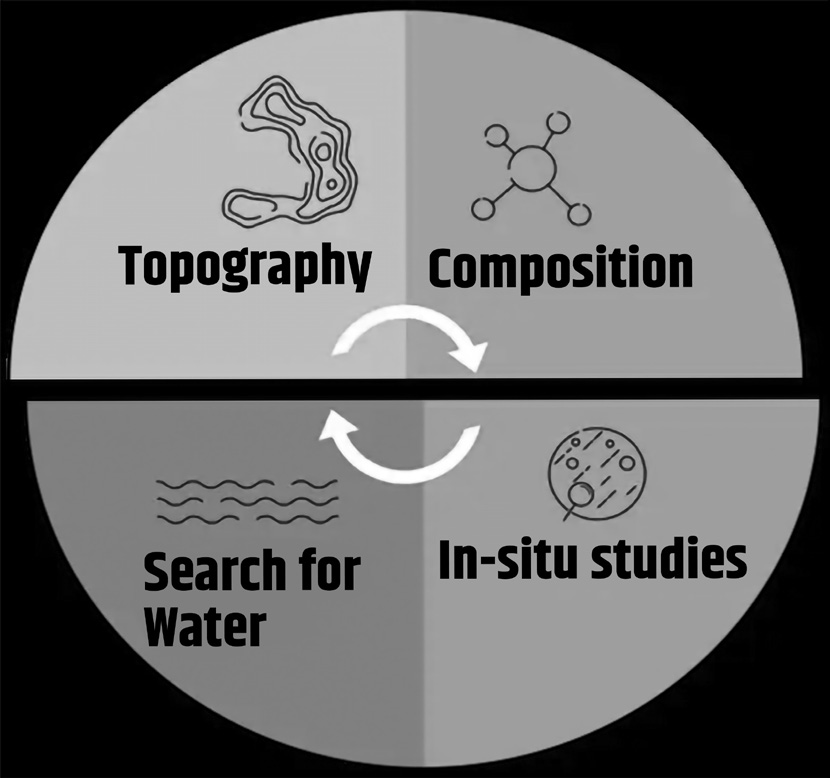
Moon provides the best linkage to Earth’s early history. It offers an undisturbed historical record of the inner Solar system environment. Though there are a few mature models, further explanations were needed to understand the origin of the Moon. Extensive mapping of lunar surface to study variations in lunar surface were essential to trace back the origin and evolution of the Moon. Evidence for water molecules discovered by Chandrayaan-1, required further studies on the extent of water molecule distribution on the surface, below the surface and in the tenuous lunar exosphere to address the origin of water on Moon.
The Lunar South pole is especially interesting because of the lunar surface area that remains in shadow is much larger
Launcher
than that at the North Pole. There could be a possibility of presence of water in permanently shadowed areas around it. In addition, South Pole region has craters that are cold traps and contain a fossil record of the early Solar System.
After the injection of Chandrayaan-2, a series of manoeuvres were carried out to raise its orbit and on August 14, 2019, following Trans Lunar Insertion (TLI) manoeuvre, the spacecraft escaped from orbiting the earth and followed a path that took it to the vicinity of the Moon. On August 20, 2019, Chandrayaan-2 was successfully inserted into lunar orbit. While orbiting the moon in a 100 km higher polar orbit, on September 02, 2019, Vikram Lander was separated from the Orbiter in preparation for landing. Subsequently, two de-orbit manoeuvres were performed on Vikram Lander so as to change its orbit and begin circling the moon in a 100 km x 35 km orbit. Vikram Lander descent was as planned and normal performance was observed up to an altitude of
km. Subsequently communication from lander to the ground stations was lost.
The Orbiter placed in its intended orbit around the Moon will enrich our understanding of the moon’s evolution and mapping of the minerals and water molecules in Polar regions, using its eight state-of-the-art scientific instruments. The Orbiter camera is the highest resolution camera (0.3 m) in any lunar mission so far and will provide high resolution images which will be immensely useful to the global scientific community. The precise launch and mission management has ensured a long life of almost seven years instead of the planned one year.
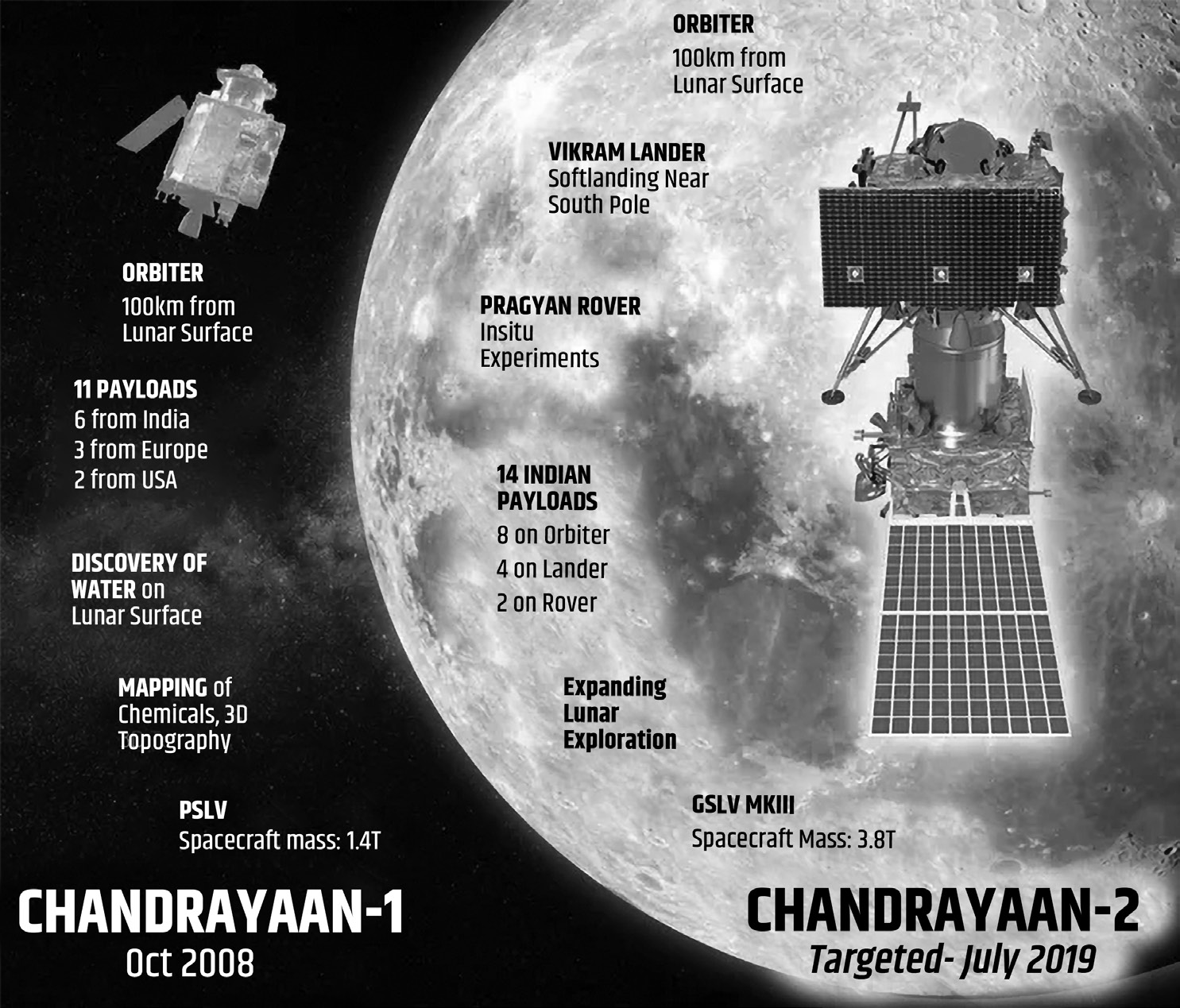
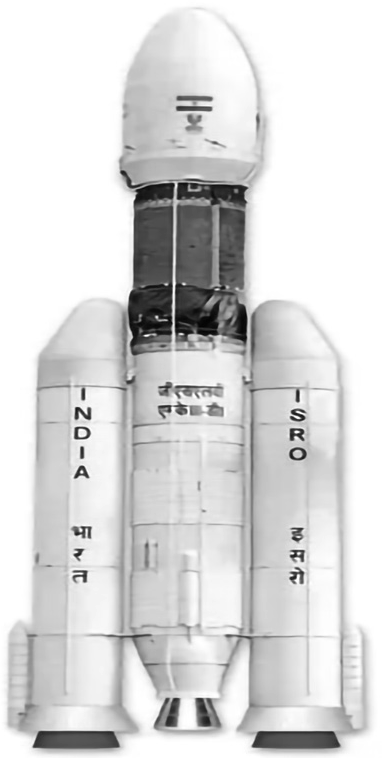
Geosynchronous Satellite Launch Vehicle Mark-III (GSLV Mk-III)- The GSLV Mk-III carried Chandrayaan 2 to its designated orbit. This three-stage vehicle is India’s most powerful launcher to date and is capable of launching 4-ton class of satellites to the Geosynchronous Transfer Orbit (GTO).
Its components are:
S200 solid rocket boosters
L110 liquid stage
C25 upper stage
Facts to remember about the Chandrayaan 2:
Orbiter
Vikram Lander
Pragyaan Rover
Assistance from Russia and France
Orbiter was successful, but lander and rover could not reach the surface of the moon.
Chandrayaan 3
Chandrayaan-3, a follow-on mission to Chandrayaan-2, was launched using LVM3 (Geosynchronous Satellite Launch Vehicle Mk III).
Chandrayaan-2 was only a partial success, because its lander Vikram and rover Pragyaan, crashed on Moon’s surface.
•
The landing site of Chandrayaan-3 is more or less the same as Chandrayaan-2: near the south pole of the moon at 70 degrees latitude.
• Chandrayaan-3 is the world’s first mission to soft-land near the lunar south pole.
Moon’s south pole has certain advantages including:
• Its craters have been untouched by sunlight for billions of years — offering an undisturbed record of the solar system’s origins.
• Its permanently shadowed craters are estimated to hold enough water that could potentially be used for future missions.
• Its positional advantages make it a suitable pit stop for future space exploration.
•
It has traces of hydrogen, ammonia, methane, sodium, mercury and silver making it an untapped source of essential resources.
• All previous spacecraft to have landed on Moon have landed in the equatorial region.
• It is easier and safer to land near the equator.
• Terrain and temperature are more hospitable and conducive for a long and sustained operation of instruments.
• Sunlight is present in abundance, at least on the side facing the earth
Launch Vehicle Mk III
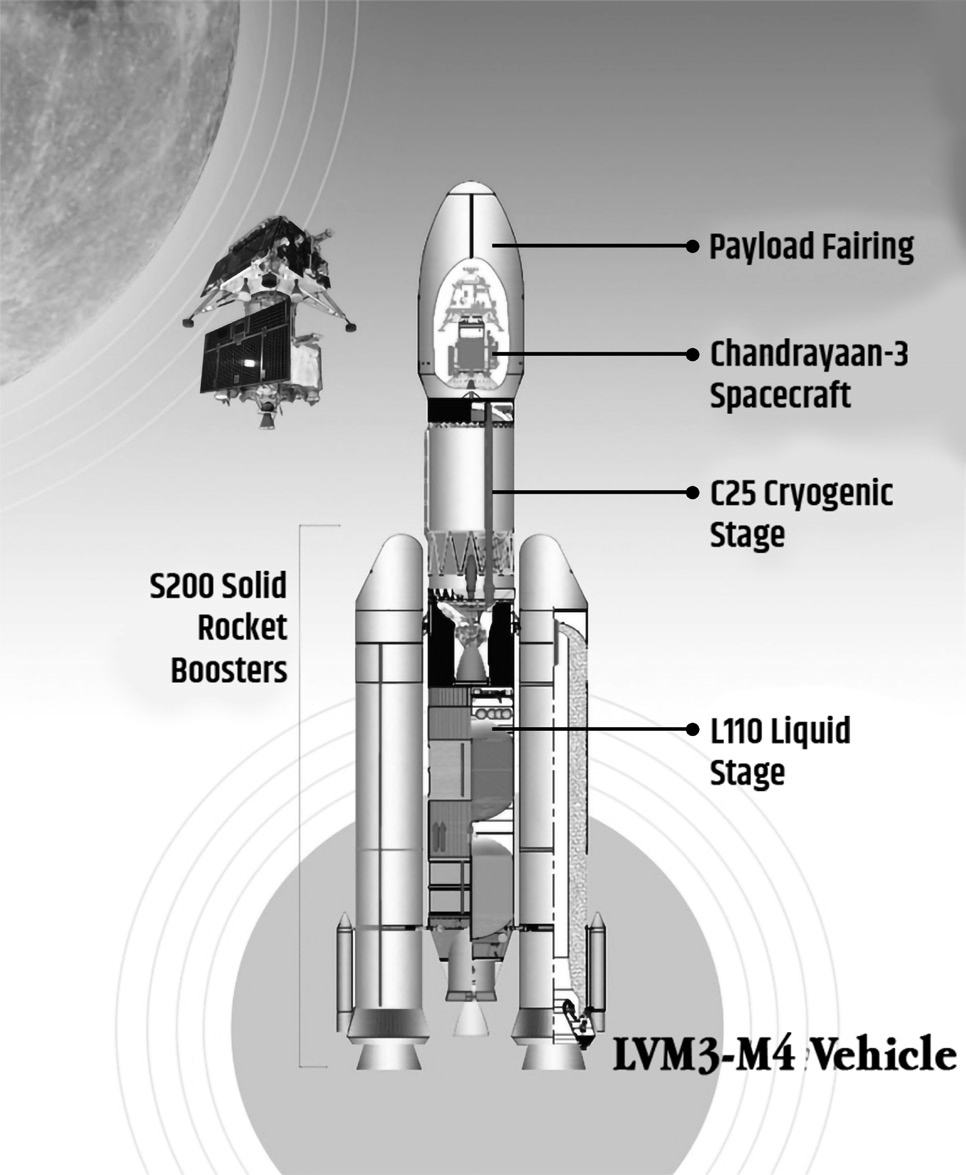
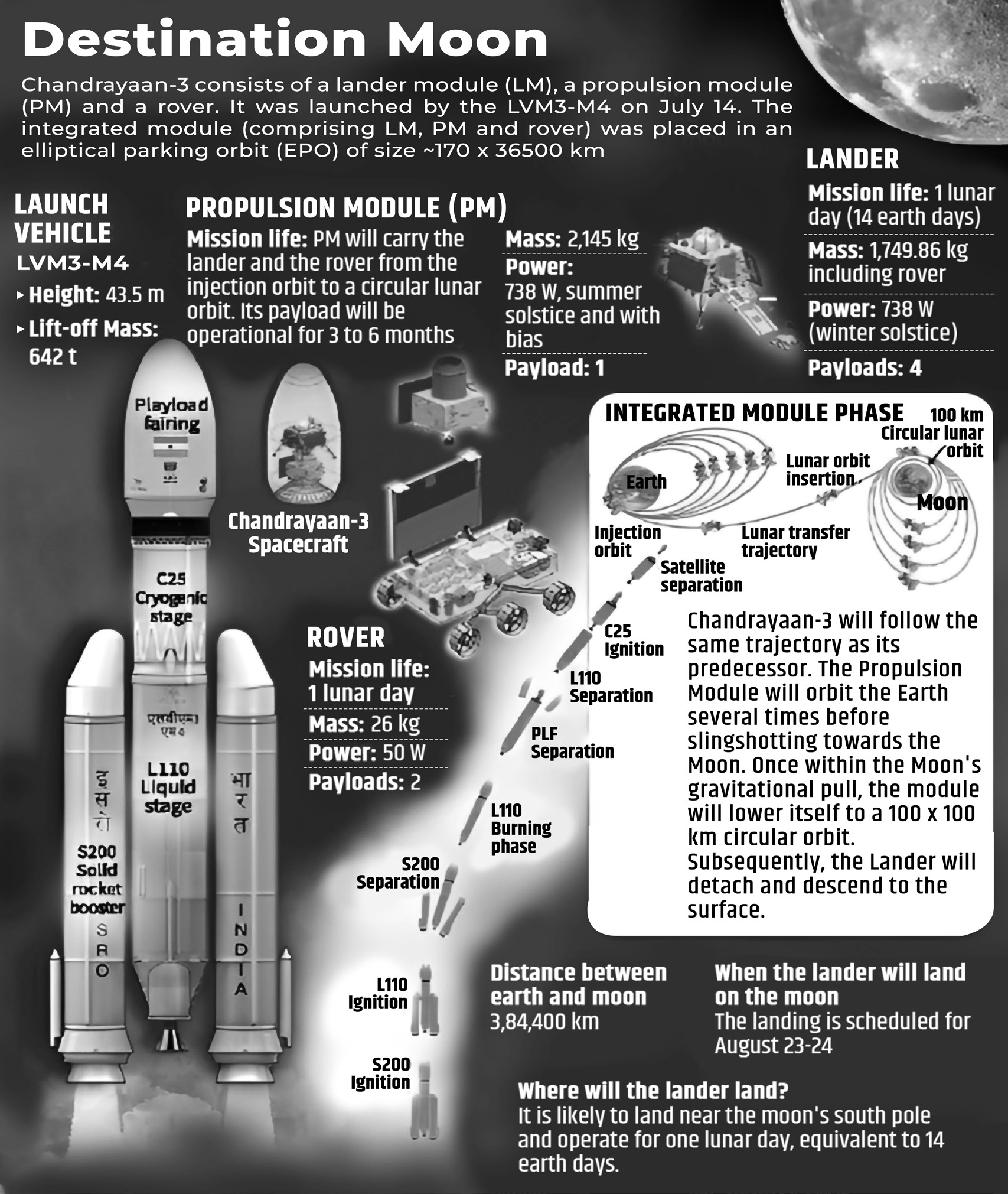
• LVM3 is a three-stage vehicle with two solid strap-on motors (S200), one liquid core stage (L110) and a high- thrust cryogenic upper stage (C25).
• It has a carrying capacity of 8 tonnes to Low Earth Orbit and 4 tonnes to Geosynchronous Transfer Orbit.
• LVM3 is the operational heavy-lift launch vehicle of ISRO and has a spectacular pedigree of completing 6 consecutive successful missions. This is the 4th operational flight of LV
Objectives of Launcher
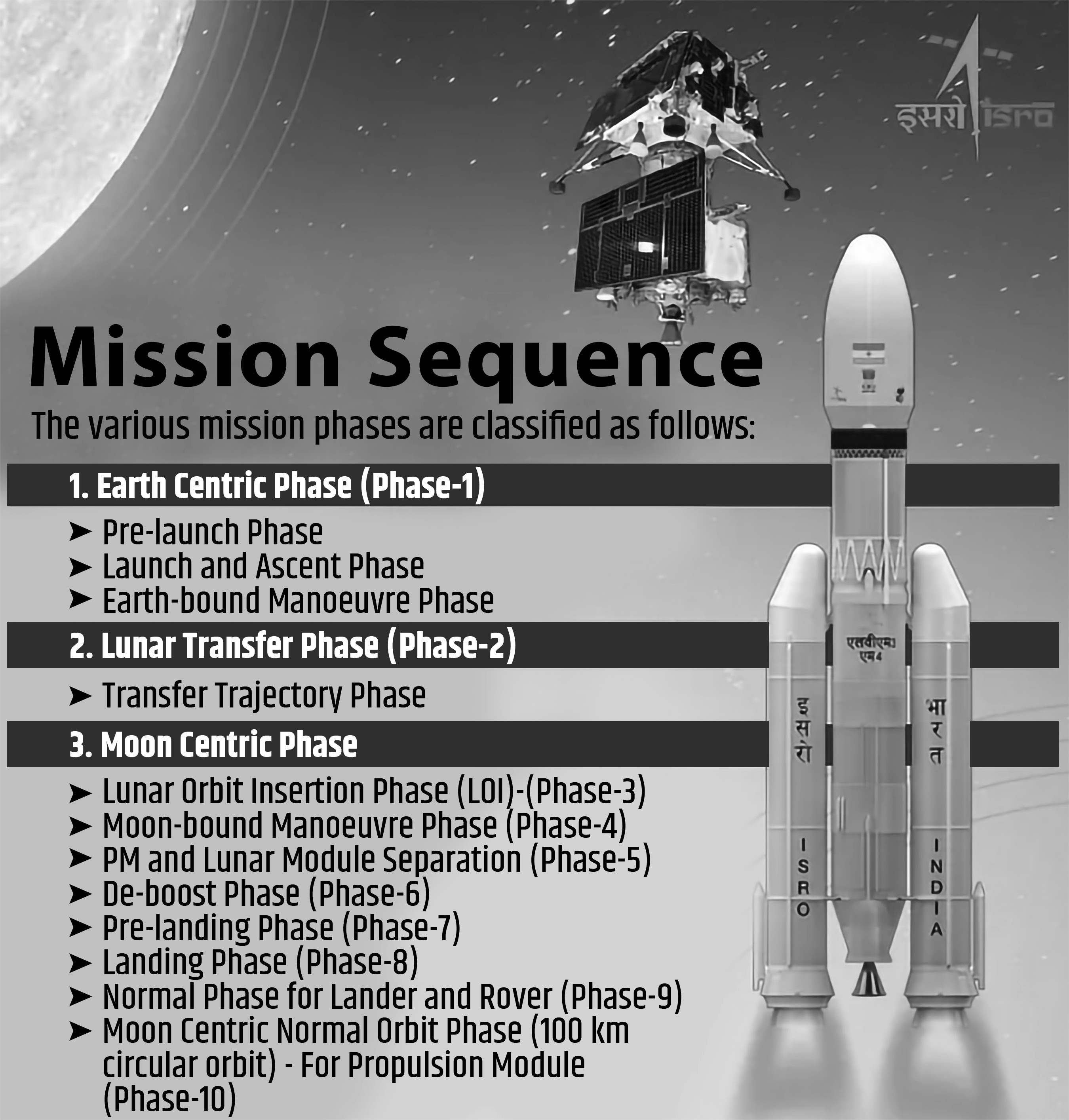
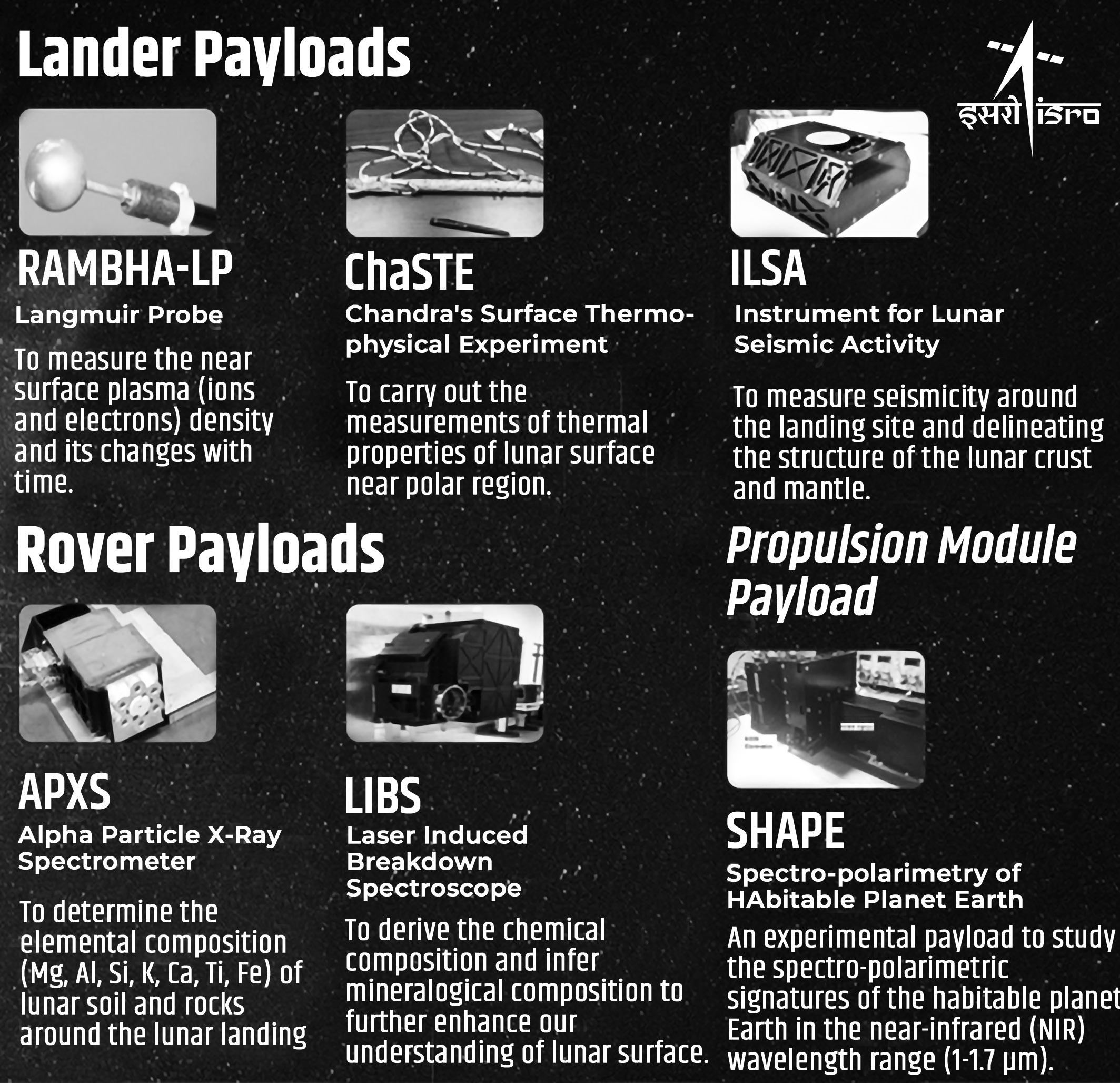
• Demonstrate a Safe and Soft Landing on Lunar Surface
• Demonstrate the rover moving on the moon and conduct in-situ scientific experiments.
• Data from Chandrayaan-3 will be useful for future Artemis human landings.
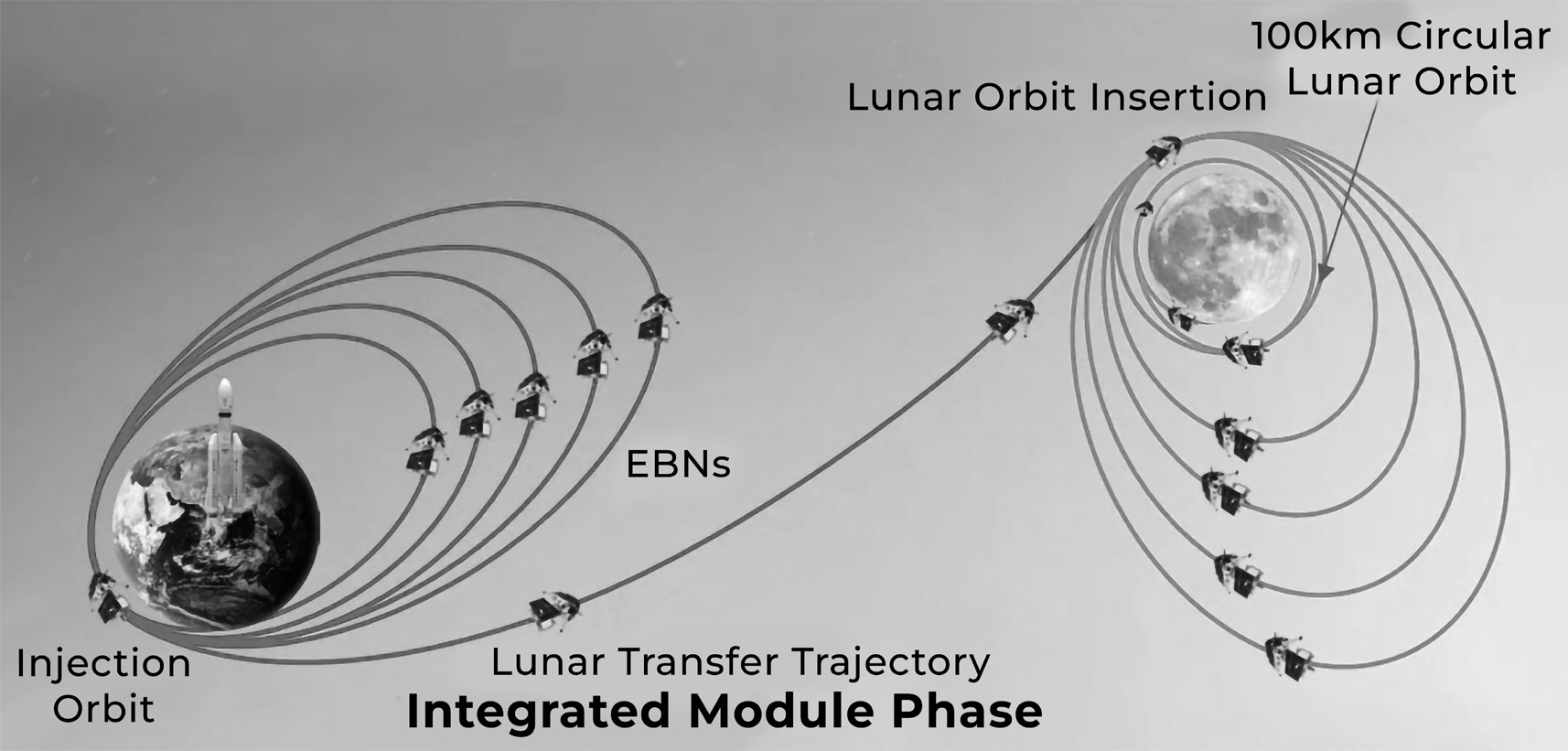
• Chandrayaan-3 consists of an indigenous propulsion module, a lander module and a rover to develop and demonstrate new technologies required for interplanetary missions
• Lander and rover will collect invaluable data for scientific research on the lunar surface for 14 Earth days (a single day on the moon).
• A successful soft landing made India the 4th country, after US, Russia and China, to achieve the feat.
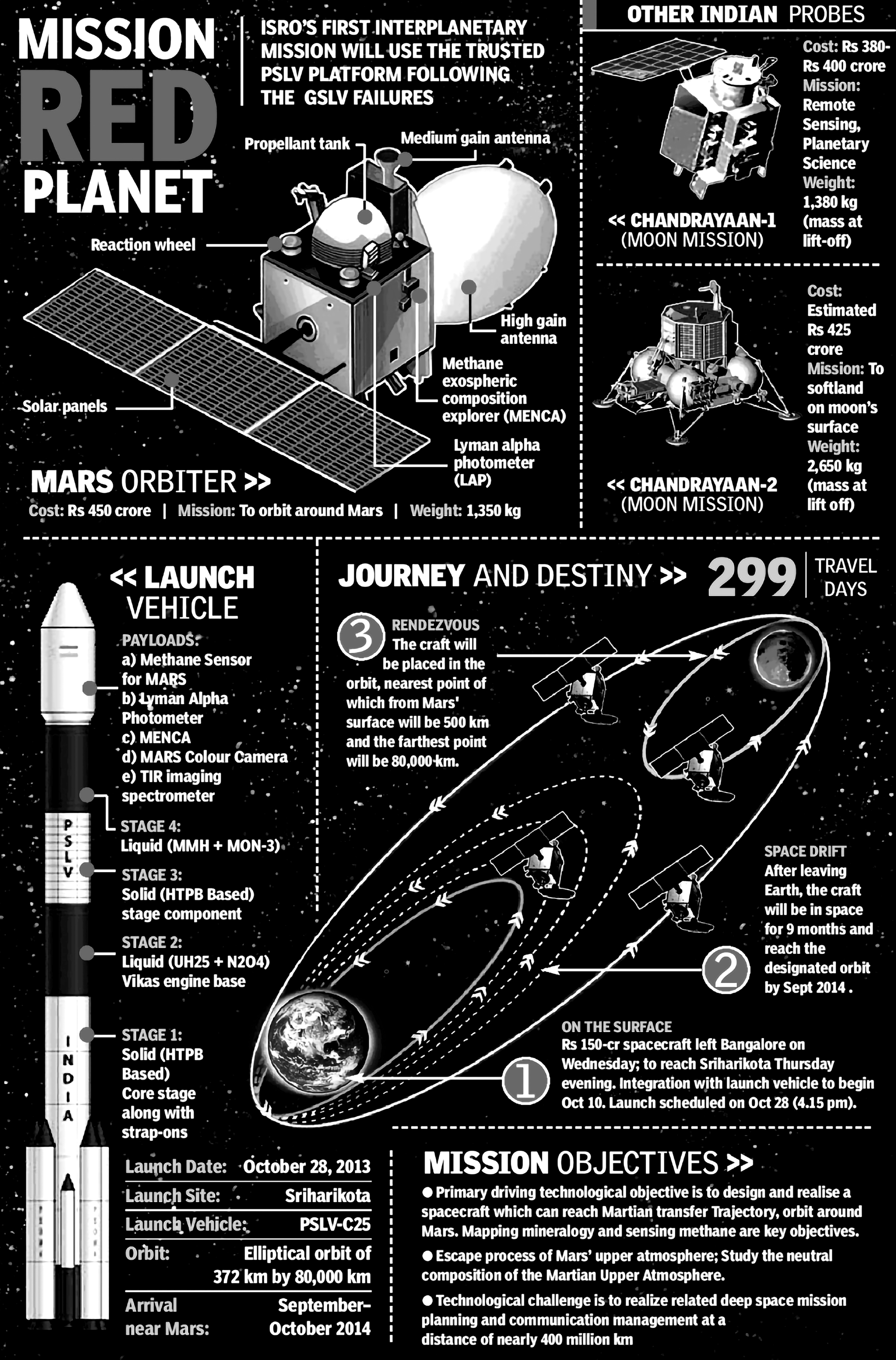
Mars Orbitor Mission 1 (MOM 1) or the Mangalyaan
Mars Orbiter Mission (MOM), India’s first interplanetary mission to planet Mars was launched onboard PSLV-C25 on November 05, 2013. ISRO has become the fourth space agency to successfully send a spacecraft to Mars orbit. Though the designed mission life is 6 months, MOM completed 7 years in its orbit on Sept 24, 2021.
Mission Objectives
The objectives of this mission are primarily technological and include design, realisation and launch of a Mars Orbiter spacecraft capable of operating with sufficient autonomy during the journey phase; Mars orbit insertion/capture and in-orbit phase around Mars. MOM carries five scientific payloads to study the Martian surface features, morphology, mineralogy and Martian atmosphere.
Scientific payloads
Mars continues to be an object of keen interest to scientists in the context of planetary evolution and extra-terrestrial life. Based on our understanding of Mars, which was thought to be probably a warm and wet planet earlier, is now seen to be dry with
a thin atmosphere. How this evolution has taken place is still a topic of research. In this backdrop, the Indian Mars Orbiter Mission carried the following five scientific payloads:
Mars Colour Camera (MCC)
• The Mars Colour Camera is a versatile and multi-purpose snap shot camera with R-G-B Bayer pattern to map various morphological features on Mars and return visual images of Mars and its environs. Besides providing context information for other payloads, MCC is also expected to observe and help in furthering our understanding of events like dust storms, dust devils etc. that are known to occur in Mars. The highly elliptical orbit of the current mission allows imaging of localized scenes at high spatial resolution as well as provides a synoptic view of the full globe. This payload is developed by Space Application Centre Ahmedabad.
• The main objective of the Mars Colour camera therefore is:
To map various morphological features on Mars with varying resolution and scales in the elliptical orbit.
To provide context information for the other science payloads.
Thermal Infrared Imaging Spectrometer (TIS)- The Thermal Infrared Imaging Spectrometer is a grating- based spectrometer which will measure the thermal emission from Martian surface. The data acquired by TIS will be processed and analysed in order to:
• Map temperature of the Martian surface
• Study the composition and mineralogy of Mars
• This spectrometer operates in the thermal infrared (TIR) region (7 micron to 13 micron). TIS has been configured with an un-cooled micro-bolometer array that saves significantly in terms of weight and power when compared to a cooled IR detector. This payload is developed by Space Applications Centre, Ahmedabad
Methane Sensor for Mars (MSM)- The Methane Sensor for Mars (MSM) is a differential radiometer based on Fabry-Perot Etalon filters operating in the short-wave infrared (SWIR) region. It measures solar radiance in two SWIR channels. There is absorption by CH4 in the first channel (methane channel) whereas no absorption in the second spectral channel (reference channel). So the differential signal gives a measure of column amount of CH4. It can measure CH4 concentration in the Martian atmosphere with few parts-per-billion accuracy. By scanning the scene from apareon, MSM can map the spatial distribution of methane. The temporal and spatial variation of methane derived from MSM data may provide some insight regarding its origin; whether it is biogenic or abiogenic. This payload is developed by Space Application Centre Ahmedabad.
Mars Exospheric Neutral Composition Analyser (MENCA)
Lyman Alpha Photometer (LAP)
Specifications of the mission
• Highly elliptical orbit geometry of MOM enables its Camera (MCC) to take snap shots of Full disc of Mars at its farthest point and finer details from closest point.
• First time observation of the far side of Deimos, one of the moons of Mars.
Achievements
• The Mars Colour Camera, one of the scientific payloads onboard MOM, has produced 1100+ images so far and published a Mars Atlas.
• Published more than 35 research papers in peer-reviewed journals.
• India’s ability to successfully realize the complex mission to Mars in its first attempt, in a cost-effective (Rupees 450 Cr) has captured the world attention and has propelled India’s image as a credible space fairing nation to greater heights. This capability could pave the way for greater opportunities for Space Commerce including launch services and marketing of Satellite Imageries.
• Mars Orbiter Mission is a mission of national pride which has attracted the attention of students, general public, media and international science/ technical community. Importantly, Mars Orbiter Mission has created enthusiasm among the younger generation in the country, provoked their curiosity to understand and discuss space related techniques and is maintaining the tempo throughout the mission.
Major results
• The solar coronal dynamics during the post-maxima phase of the solar cycle 24 using S -band radio signals from the MOM (MNRAS, 2022)
• Enhanced escape of Martian atmosphere during global dust storm (JGR-Planets, 2020)
• MENCA detected ‘hot’ (suprathermal – more energetic compared to thermal) Argon in the exosphere of Mars (GRL, 2017). Mars was at perihelion during this observation.
• Mars Exospheric Neutral Composition Analyser (MENCA) observations have shown for the first time that the abundance of Oxygen exceeds that of Carbon-Dioxide at an altitude of ~270 ±10 km, during the perihelion evening hours (GRL, 2016).
• Atmospheric optical depth (AOD) was estimated through Mars Colour Camera (MCC) observations and the studies reported the presence of lee-wave clouds above the southern wall of Valles Marineris (Icarus, 2015)
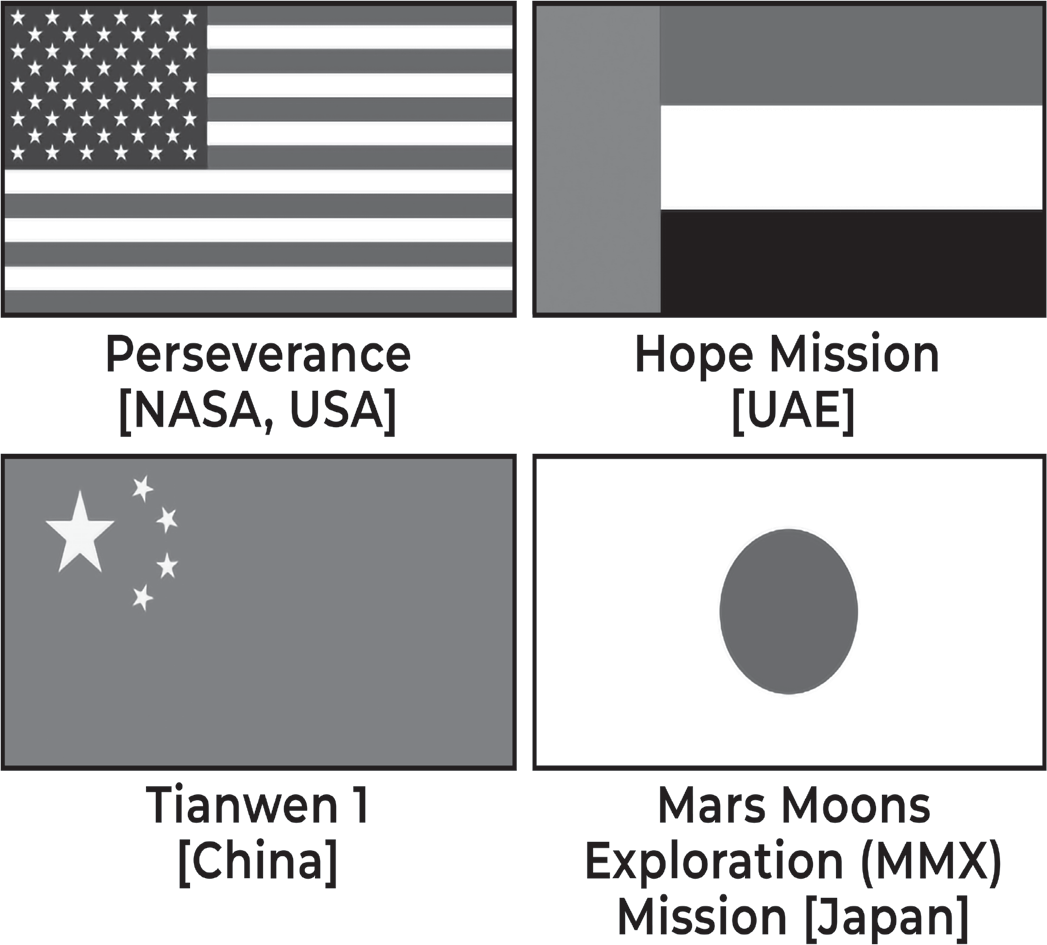
Perseverance by NASA
• Perseverance rover mission is part of NASA’s Mars Exploration Program, a long-term effort of robotic exploration of Mars
• Recently, it placed a titanium tube containing a rock sample on the surface of Mars.
• Igneous rock sample was collected from Mars Jezero Crater called South Séítah
• Samples are being placed at a location called “Three Forks,” first such sample depot on another world
• Depot will serve as a backup if Perseverance can’t deliver its samples and subsequent NASA missions would
• Recently, it also captured the solar eclipse on Mars featuring Phobos, one of Mars’ two moons (other is Deimos)
• In a related news, Mars Oxygen In-Situ Resource Utilization Experiment (MOXIE) has produced oxygen at Mars with components from the planet’s atmosphere
• MOXIE was sent (by Massachusetts Institute of Technology) with NASA’s Perseverance rover
AstroSat
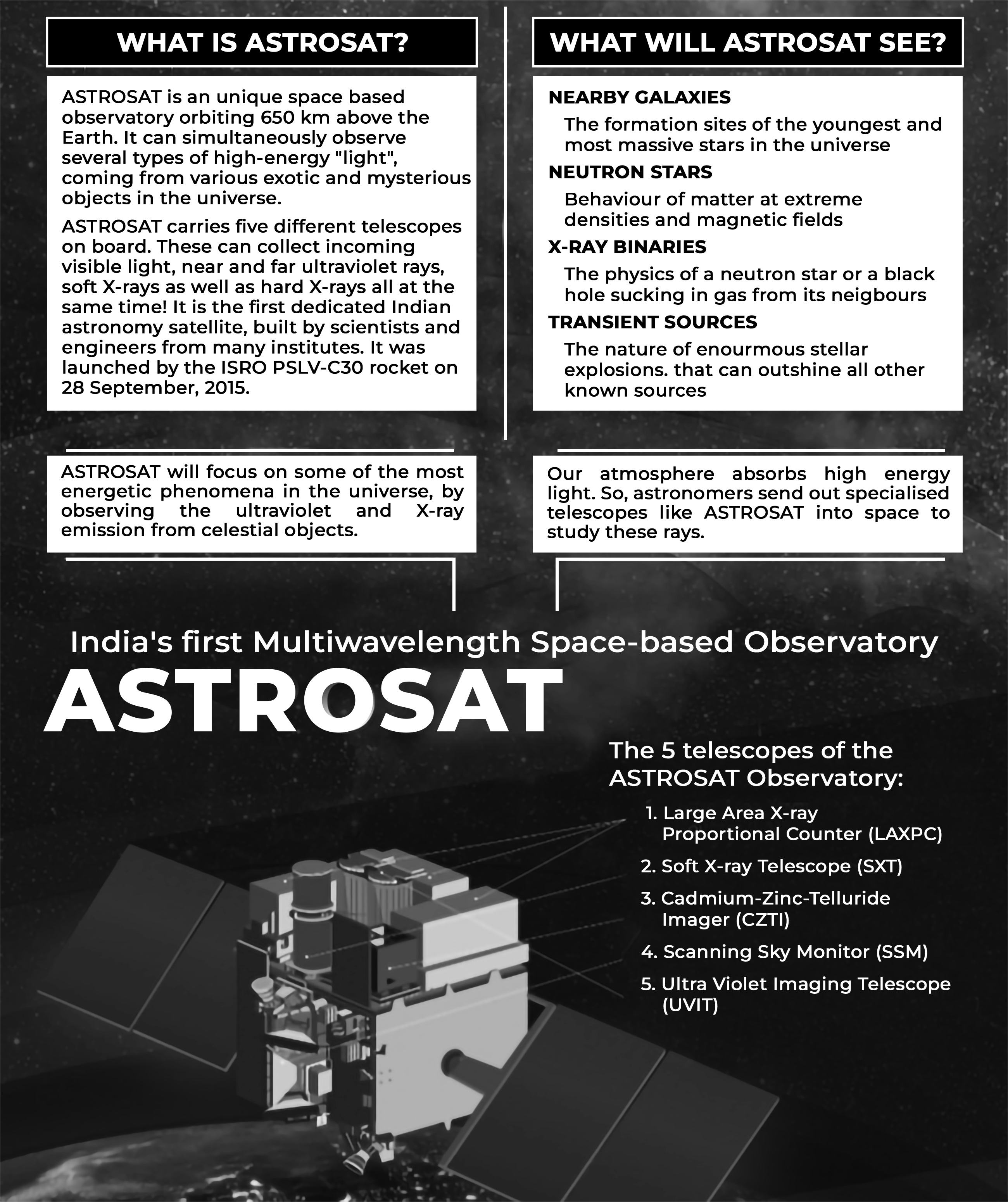
AstroSat is the first dedicated Indian astronomy mission aimed at studying celestial sources in X-ray, optical and UV spectral bands simultaneously. The payloads cover the energy bands of Ultraviolet (Near and Far), limited optical and X-ray regime (0.3 keV to 100keV). One of the unique features of AstroSat mission is that it enables the simultaneous multi- wavelength observations of various astronomical objects with a single satellite.
AstroSat with a lift-off mass of 1515 kg was launched on September 28, 2015 into a 650 km orbit inclined at an angle
of 6º to the equator by PSLV-C30 from Satish Dhawan Space Centre, Sriharikota. The minimum useful life of the AstroSat mission was expected to be 5 years.
After injection into Orbit, the two solar panels of AstroSat were automatically deployed in quick succession. The spacecraft control centre at Mission Operations Complex (MOX) of ISRO Telemetry, Tracking and Command Network (ISTRAC), Bengaluru manages the satellite during its entire mission life. The science data gathered by five payloads of AstroSat are telemetered to the ground station at MOX. The data is then processed, archived and distributed by Indian Space Science Data Centre (ISSDC) located at Bylalu, near Bengaluru.
Scientific Objectives of AstroSat
• To understand high energy processes in binary star systems containing neutron stars and black holes.
• Estimate magnetic fields of neutron stars.
• Study star birth regions and high energy processes in star systems lying beyond our galaxy.
• Detect new briefly bright X-ray sources in the sky.
• Perform a limited deep field survey of the Universe in the Ultraviolet region.
At present, all the payloads are operational and are observing the cosmic sources. The spacecraft and payloads are healthy. The first six months was dedicated for performance verification and calibration of payloads. After that, the science observations by the payloads began.
Facts to Remember
• Payloads
• The Ultraviolet Imaging Telescope (UVM), capable of observing the sky in the Visible, Near Ultraviolet and Far Ultraviolet regions of the electromagnetic spectrum
• Large Area X-ray Proportional Counter (LAXPC), is designed for study the variations in the emission of X-rays. from sources like X-ray binaries, Active Galactic Nuclei and other cosmic sources.
• Soft X-ray Telescope (SXT) is designed for studying how the X-ray spectrum of 0.3-8 keV range coming from distant celestial bodies varies with time
• Cadmium Zinc Telluride Imager (CZTI), functioning in the X-ray region, extends the capability of the satellite to sense X-rays of high energy in 10-100 keV range
• Scanning Sky Monitor (SSM), is intended to scan the sky for long term monitoring of bright X-ray sources in binary stars, and for the detection and location of sources that become bright in X-rays for a short duration of time.
Gaganyaan Mission
Gaganyaan project envisages demonstration of human spaceflight capability by launching crew of 3 members to an orbit of 400 km for a 3 days mission and bring them back safely to earth, by landing in Indian sea waters.
The project is accomplished through an optimal strategy by considering inhouse expertise, experience of Indian industry, intellectual capabilities of Indian academia & research institutions along with cutting edge technologies available with international agencies. The pre-requisites for Gaganyaan mission include development of many critical technologies including human rated launch vehicle for carrying crew safely to space, Life Support System to provide an earth like environment to crew in space, crew emergency escape provision and evolving crew management aspects for training, recovery and rehabilitation of crew.
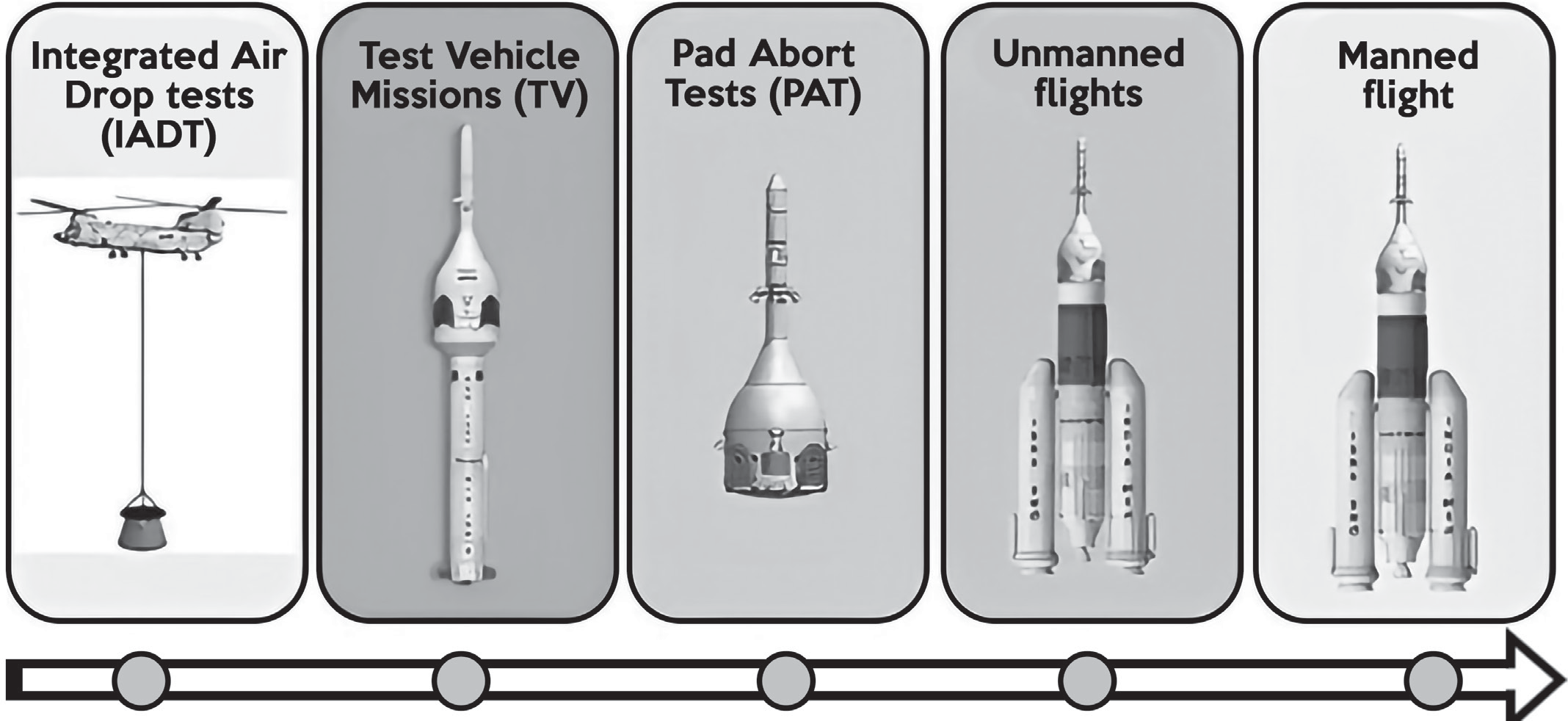
Various precursor missions are planned for demonstrating the Technology Preparedness Levels before carrying out the actual Human Space Flight mission. These demonstrator missions include Integrated Air Drop Test (IADT), Pad Abort Test (PAT) and Test Vehicle (TV) flights. Safety and reliability of all systems will be proven in unmanned missions preceding manned mission.
Human rated LVM3 - HLVM3
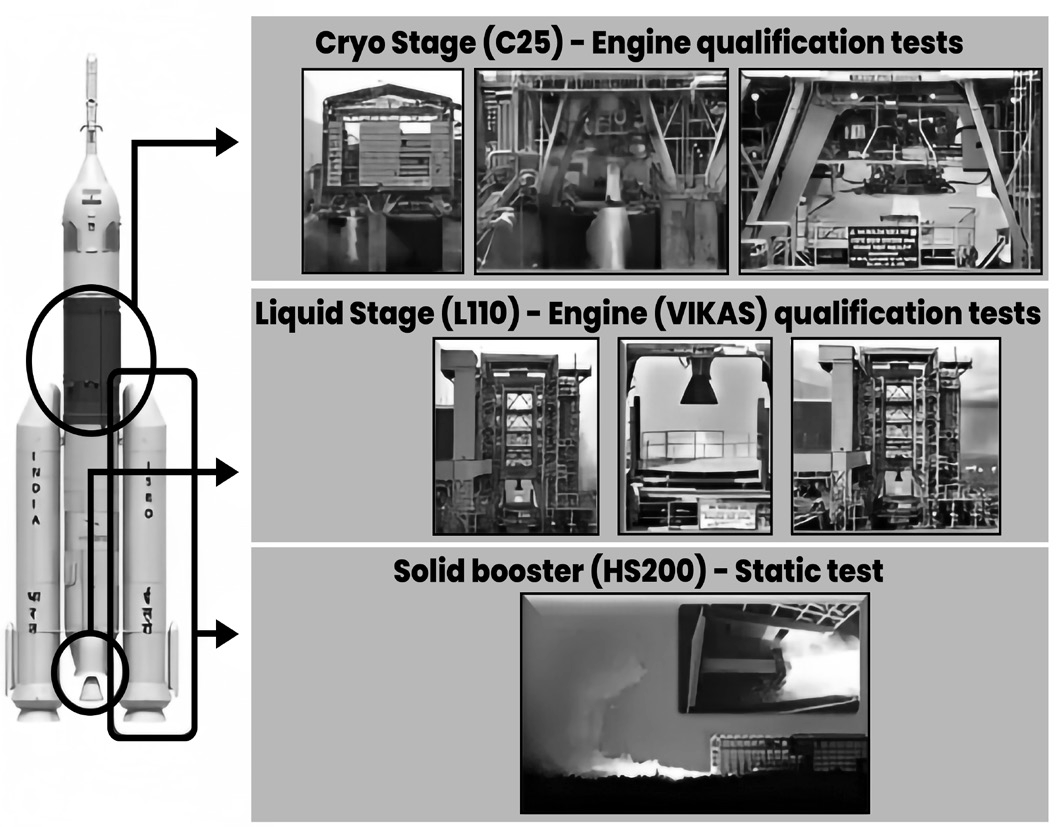
LVM3 rocket - The well proven and reliable heavy lift launcher of ISRO, is identified as the launch vehicle for Gaganyaan
mission. It consists of solid stage, liquid stage and cryogenic stage. All systems in LVM3 launch vehicle are re-configured to meet human rating requirements and christened Human Rated LVM3. HLVM3 will be capable of launching the Orbital Module to an intended Low Earth Orbit of 400 km.
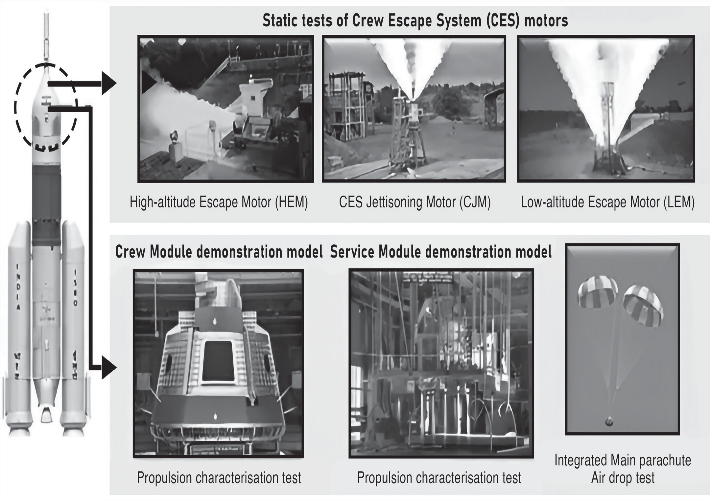
HLVM3 consists of Crew Escape System (CES) powered by a set of quick acting, high burn rate solid motors which ensures that Crew Module along with crew is taken to a safe distance in case of any emergency either at launch pad or during ascent phase.
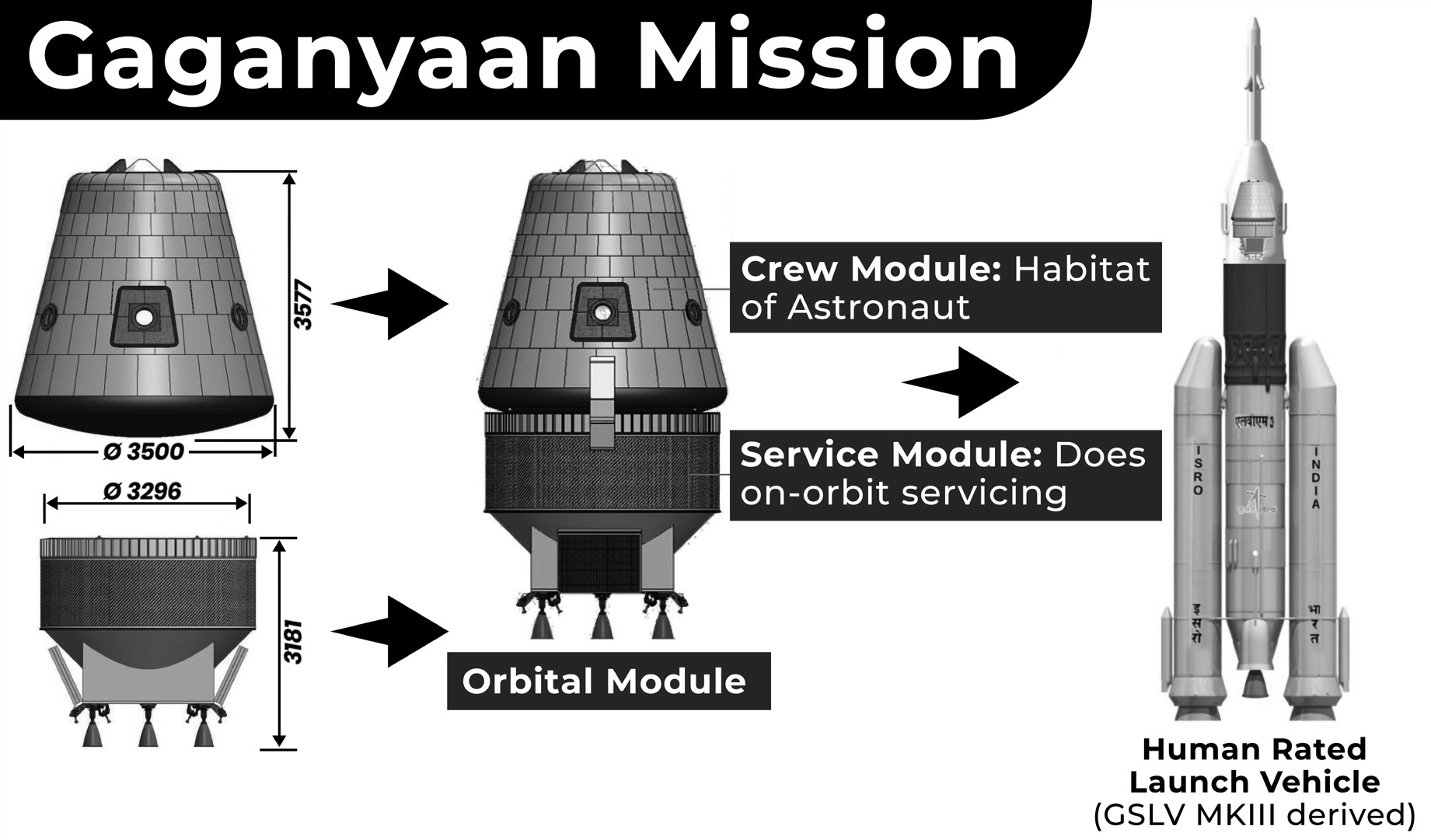
Orbital Module (OM)
Orbital Module (OM) that will be Orbiting Earth comprises of Crew Module (CM) and Service Module (SM). OM is equipped with state-of-the-art avionics systems with adequate redundancy considering human safety.
CM is the habitable space with Earth like environment in space for the crew. It is of double walled construction consisting of pressurized metallic Inner Structure and unpressurised External Structure with Thermal Protection System (TPS). It houses the crew interfaces, human centric products, life support system, avionics and deceleration systems. It is also designed for re-entry to ensure safety of the crew during descent till touchdown.
SM will be used for providing necessary support to CM while in orbit. It is an unpressurized structure containing thermal system, propulsion system, power systems, avionics systems and deployment mechanisms.
Crew training for Gaganyaan
Astronaut Training Facility established in Bengaluru caters to Classroom training, Physical Fitness training, Simulator training and Flight suit training. Training modules cover academic courses, Gaganyaan Flight Systems, Micro-gravity familiarization through Parabolic Flights, Aero-medical training, Recovery & Survival training, mastering of Flight Procedures and training on Crew Training Simulators. Aero medical training, Periodical flying practice and Yoga are also included as part of the training.
Aditya-L1 Mission
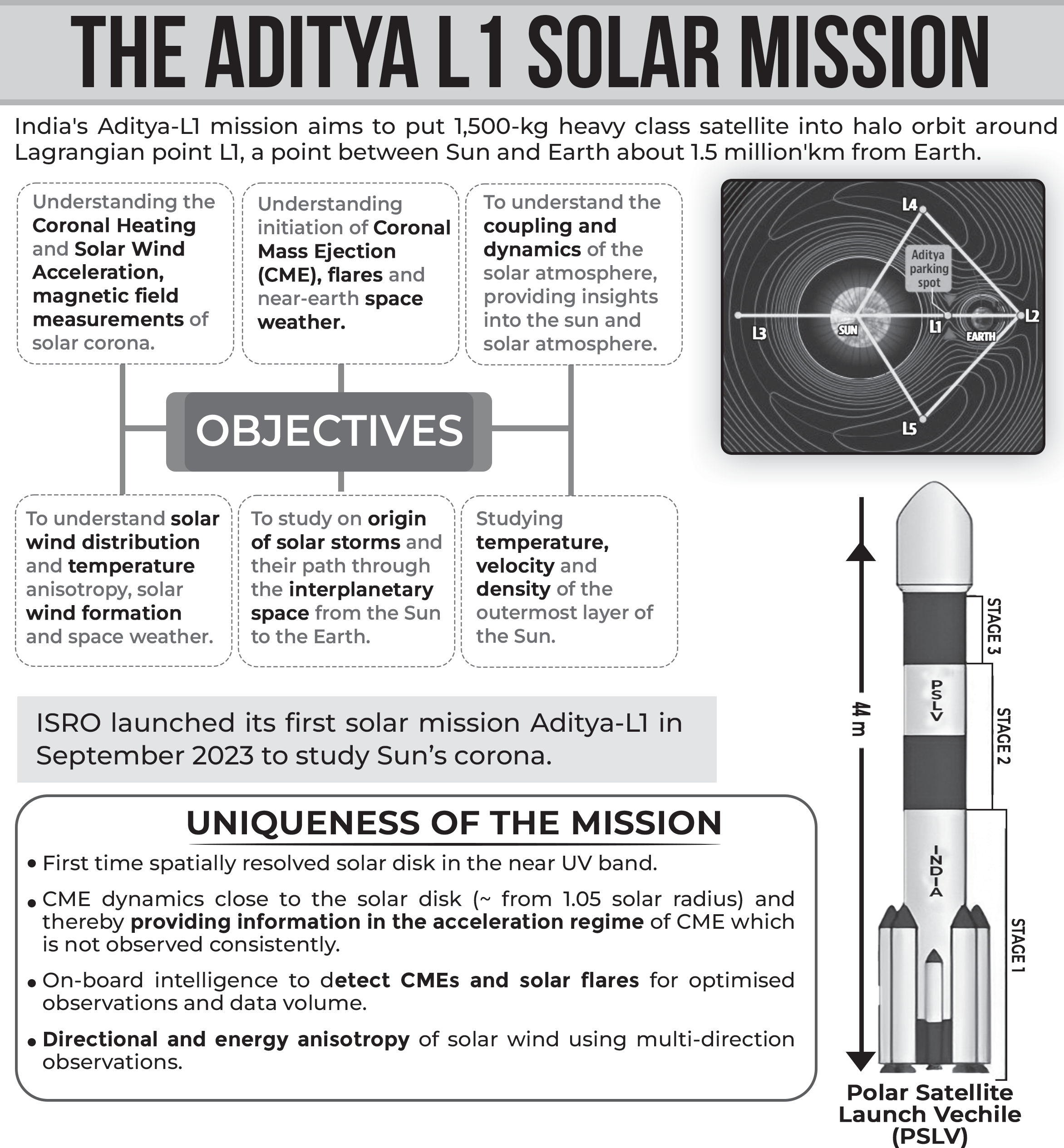
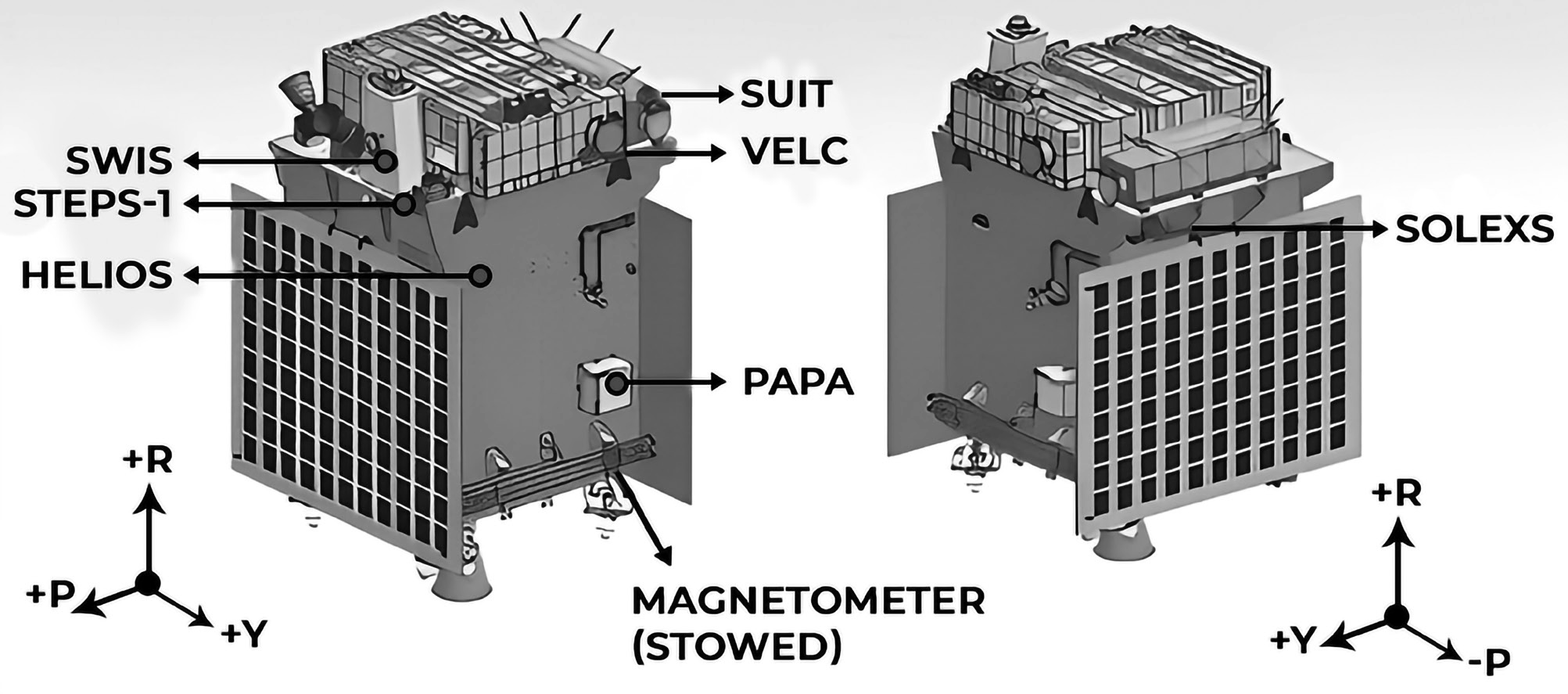
Aditya-L1 is a coronagraphy spacecraft designed and developed by the Indian Space Research Organisation (ISRO) and other Indian Space Research Institutes to study the solar atmosphere. Launched on September 2, 2023, it orbits 1.5 million km from Earth in a halo around Lagrange point 1 (L1) between Earth and the Sun. The first Indian mission dedicated to observing the Sun, Aditya-L1 will study solar atmosphere, solar magnetic storms, and their impact on Earth’s environment for nearly 5 years. Launched aboard PSLV C57, it successfully achieved its intended orbit and separated from its fourth stage. The Aditya-L1 is equipped with seven payloads (instruments) on board to study the Sun’s corona, solar emissions, solar winds and flares, and Coronal Mass Ejections (CMEs), and will carry out round-the-clock imaging of the Sun. The position is perfect for scientists to study the Sun without any blockage from the region.
Objectives of the Mission
• As per ISRO, the mission’s objective includes understanding chromospheric and coronal heating, the physics of the partially ionized plasma, formation of the coronal mass ejections and flares.
• Understand the scientific reason behind solar corona and its heating mechanism.
• Calculate the Temperature, velocity, and density of the outermost layer of the Sun.
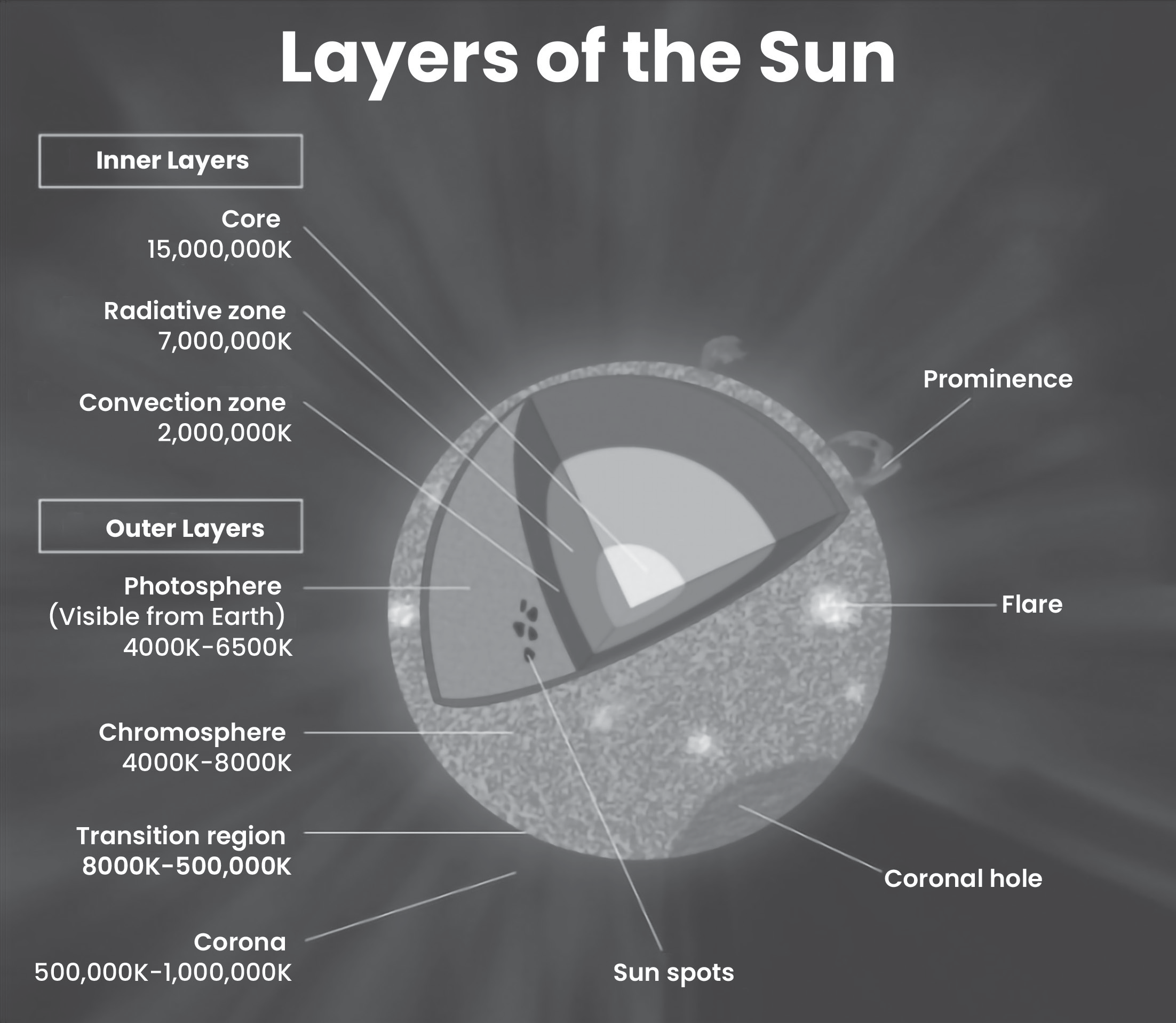
• Study various layers of the sun. Gather magnetic field measurements of the solar corona.
• Study the formation, and composition of solar wind and space weather.
• This mission will give us more details about the sun and the solar atmosphere which is affected by the sun’s activities
Significance of studying the Sun
• The solar weather and environment affect the weather of the entire solar system.
• Variations in this weather can change the orbits of satellites or shorten their lives, interfere with or damage onboard electronics, and cause power blackouts and other disturbances on Earth.
• Knowledge of solar events is key to understanding space weather.
• To learn about and track Earth-directed storms, and to predict their impact, continuous solar observations are needed.
• Every storm that emerges from the Sun and heads towards Earth passes through L1, and a satellite placed in the halo orbit around L1 of the Sun-Earth system has the major advantage of continuously viewing the Sun without any occultation/eclipses.
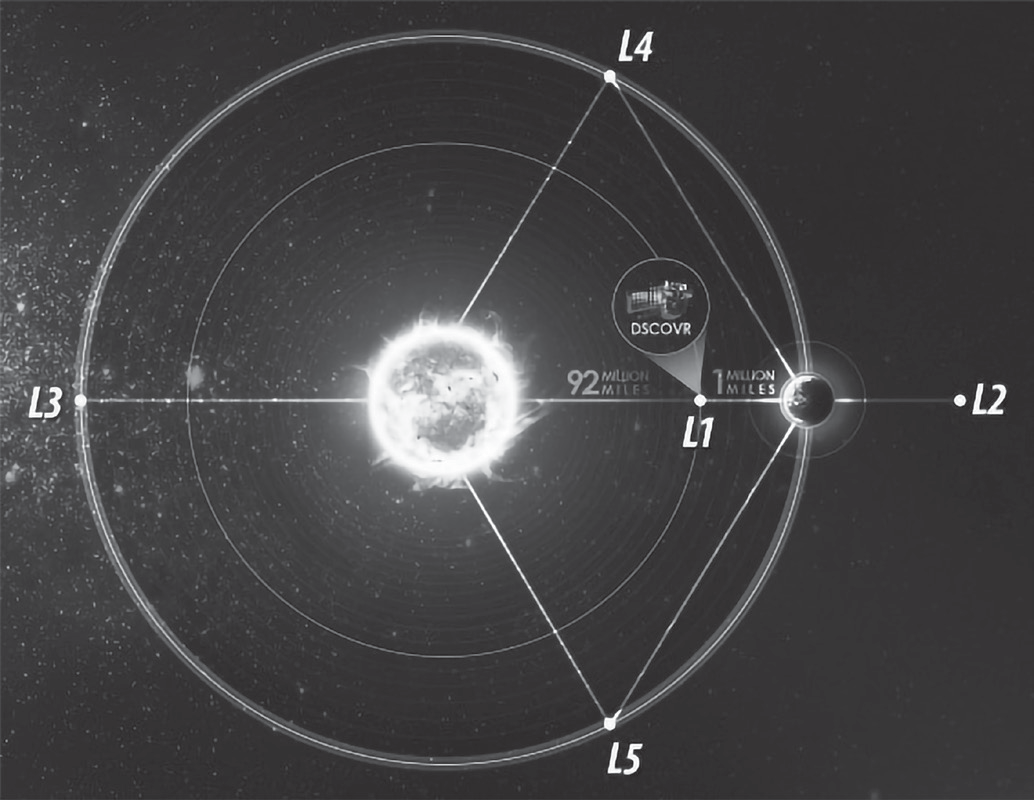
• L1 refers to Lagrangian/Lagrange Point 1, one of five points in the orbital plane of the Earth-Sun system.
• Lagrange Points, named after Italian-French mathematician Josephy-Louis Lagrange, are positions in space where the gravitational forces of a two-body system (like the Sun and the Earth) produce enhanced regions of attraction and repulsion.
• These can be used by spacecraft to reduce fuel consumption needed to remain in position
• The L1 point is home to the Solar and Heliospheric Observatory Satellite (SOHO), an international collaboration project of NASA and the European Space Agency (ESA).
• The L1 point is about 1.5 million km from Earth, or about one-hundredth of the way to the Sun.
Shukrayaan-1 – Venus Exploration Mission
The name ‘Shukrayaan-1’ is a combination of two words ‘Shukra’, meaning Venus, and ‘Yaana’, meaning craft, in Sanskrit. The idea of ‘Shukrayaan-1’ was born in 2012. In that year, the ISRO sought payload proposals from research institutes. The primary objective of the mission is to conduct a comprehensive study of Venus, often referred to as “Earth’s twin.” This includes examining both the surface and atmosphere of Venus, as well as analyzing its geological composition. NASA has expressed doubt about the possibility of life on Venus at this time. Nonetheless, some scientists have not ruled out the potential existence of microbes in the upper atmosphere of Venus, where the pressure is more akin to Earth’s surface. Shukrayaan-1 seems to be progressing, but ISRO has not yet disclosed important details such as the launch date and other key aspects of the project.
Recent missions to Venus include European Space Agency’s Venus Express, which orbited the planet from 2006 until 2016, and Japan’s Akatsuki Venus Climate Orbiter, which has been in orbit since 2016. Additionally, NASA’s Parker Solar Probe has conducted multiple flybys of Venus. In February 2022, NASA announced that the spacecraft had successfully captured its first visible light images of Venus’ surface during its flyby in February 2021.
Radar Imaging Satellite (RISAT)
The Radar Imaging Satellite (RISAT) series is designed to provide all-weather surveillance with synthetic aperture radar for agricultural, forestry, and disaster management applications.
XPOSAT – X-ray Polarimetry Satellite
XPoSat (X-ray Polarimeter Satellite) is India’s first dedicated polarimetry mission to study various dynamics of bright astronomical X-ray sources in extreme conditions. The spacecraft will carry two scientific payloads, POLIX measuring polarimetry parameters in the medium X-ray energy range of 8-30 keV photons, and XSPECT providing spectroscopic information in the energy range of 0.8-15 keV. The emission mechanisms from astronomical sources, such as blackholes, neutron stars, active galactic nuclei, and pulsar wind nebulae, are complex and challenging to understand. Polarimetry measurements add dimension to our understanding, such as the degree and angle of polarization, making them an excellent diagnostic tool. The polarimetric observations and spectroscopic measurements are expected to break the degeneracy of various theoretical models of astronomical emission processes, and this will be the major direction of research from XPoSat by the Indian science community.
XPoSat payloads-
• POLIX: POLIX is an X-ray Polarimeter designed for astronomical observations in the 8-30 keV energy band. It is developed by the Ramam Research Institute (RRI) in collaboration with U R Rao Satellite Centre (URSC). The instrument consists of a collimator, scatterer, and four X-ray proportional counter detectors. The scatterer is made of low atomic mass material, causing anisotropic Thomson scattering of incoming polarised X-rays. The collimator restricts the field of view to 3 degree x 3
degree, allowing only one bright source for most observations. POLIX is the first payload in the medium X-ray energy
band dedicated for polarimetry measurements.
XSPECT: XSPECT is an X-ray SPECtroscopy and Timing payload onboard XPoSat, providing fast timing and good spectroscopic resolution in soft X-rays. It can monitor spectral state changes in continuum emission, line flux, and profile, and temporal soft X-ray emission in the X-ray energy range of 0.8-15 keV. An array of Swept Charge Devices (SCDs) provides an effective area of over 30 cm2 at 6 keV with energy resolution better than 200 eV at 6 keV. Passive collimators narrow the field of view. XSPECT observes various sources, including X-ray pulsars, blackhole binaries, low-magnetic field neutron stars, AGNs and magnetars