The Colonial Legacy
India’s colonial history has had a profound impact on its development since 1947. British rule radically reshaped India in various ways, but these changes, while often positive in nature, have been described by A. Gunder Frank as the ‘development of underdevelopment.’ The economic shifts brought about by colonial rule were intertwined with a system that entrenched poverty and dependence on Britain, despite some of the advances, such as the development of railways.
Key sectors like agriculture, industry, transport, communication, finance, administration, and education were transformed during this period. While the improvements were notable, they were also deeply embedded in a colonial framework that ultimately contributed to India’s economic subordination. This resulted in a colonial structure that perpetuated inequality and hindered true development.
There were four main characteristics of this colonial structure:
Colonialism fully integrated India into the global capitalist system, but always in a subordinate position, with India’s economic interests serving Britain’s needs since the 1750s.
A system of production and international trade was imposed on India that suited British industry, forcing India to export raw materials like cotton, jute, and oilseeds, while importing manufactured goods from Britain.
India’s economic surplus, crucial for development, was largely diverted away from productive use. Much of the country’s savings were either misused by the colonial state or appropriated by landlords and moneylenders.
The state played a key role in maintaining this structure, with policies and priorities set in Britain, serving British interests rather than those of India. Industry and agriculture were denied the support they needed to grow.
When India gained independence on August 15, 1947, there was a sense of great joy and accomplishment, celebrating the
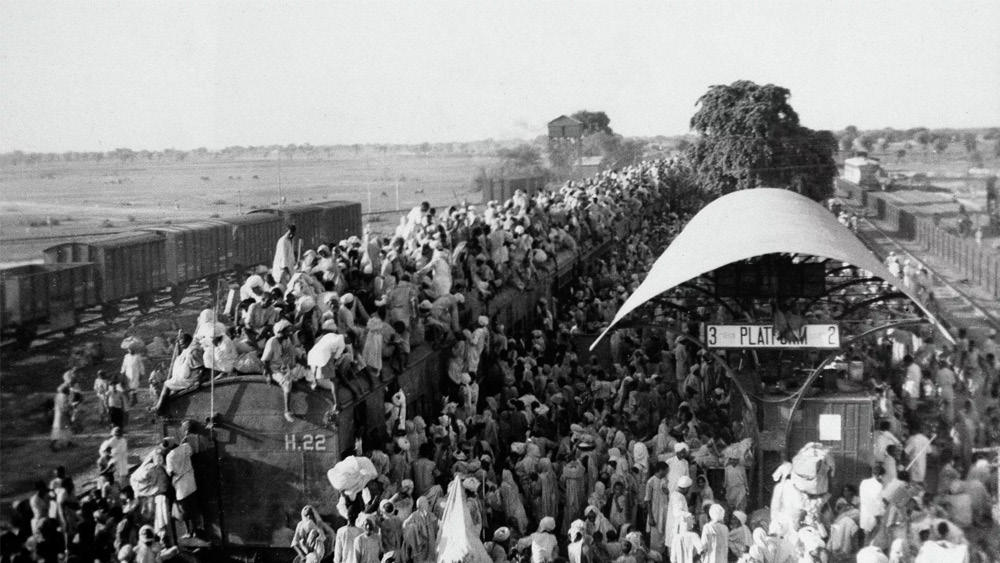
sacrifices of countless patriots. However, the celebration was tempered by the pain of partition, which divided the country and brought with it numerous challenges.
The immediate obstacles India faced at independence included:
The territorial and administrative integration of princely states,
The communal violence that accompanied Partition, which displaced nearly six million refugees from Pakistan, and the need to protect Muslims facing violence in India.
India faced the task of creating a united nation that could embrace its diversity. With its vast geographical spread, varied cultures, religions, and languages, many believed that such a diverse country would struggle to remain unified
In addition to the immediate challenges, India faced significant medium-term tasks, such as framing a constitution and establishing a democratic political system that respected civil liberties. This required organizing elections to implement a system of representative government at both the central and state levels. Another crucial challenge was dismantling the semi-feudal agrarian structure through land reforms.
Looking at the long term, the newly independent government had to focus on several key objectives. National integration was essential, as was furthering the process of nation-building. The government also had to prioritize rapid economic development, tackle widespread poverty, and lay the foundations for a planned economy.
At the same time, the government worked to meet the high expectations of the masses, fuelled by the freedom struggle, by addressing centuries of social injustice and oppression. Additionally, it aimed to craft a foreign policy that would protect India’s independence while fostering peace in a world increasingly divided by the Cold War and its rival power blocs.