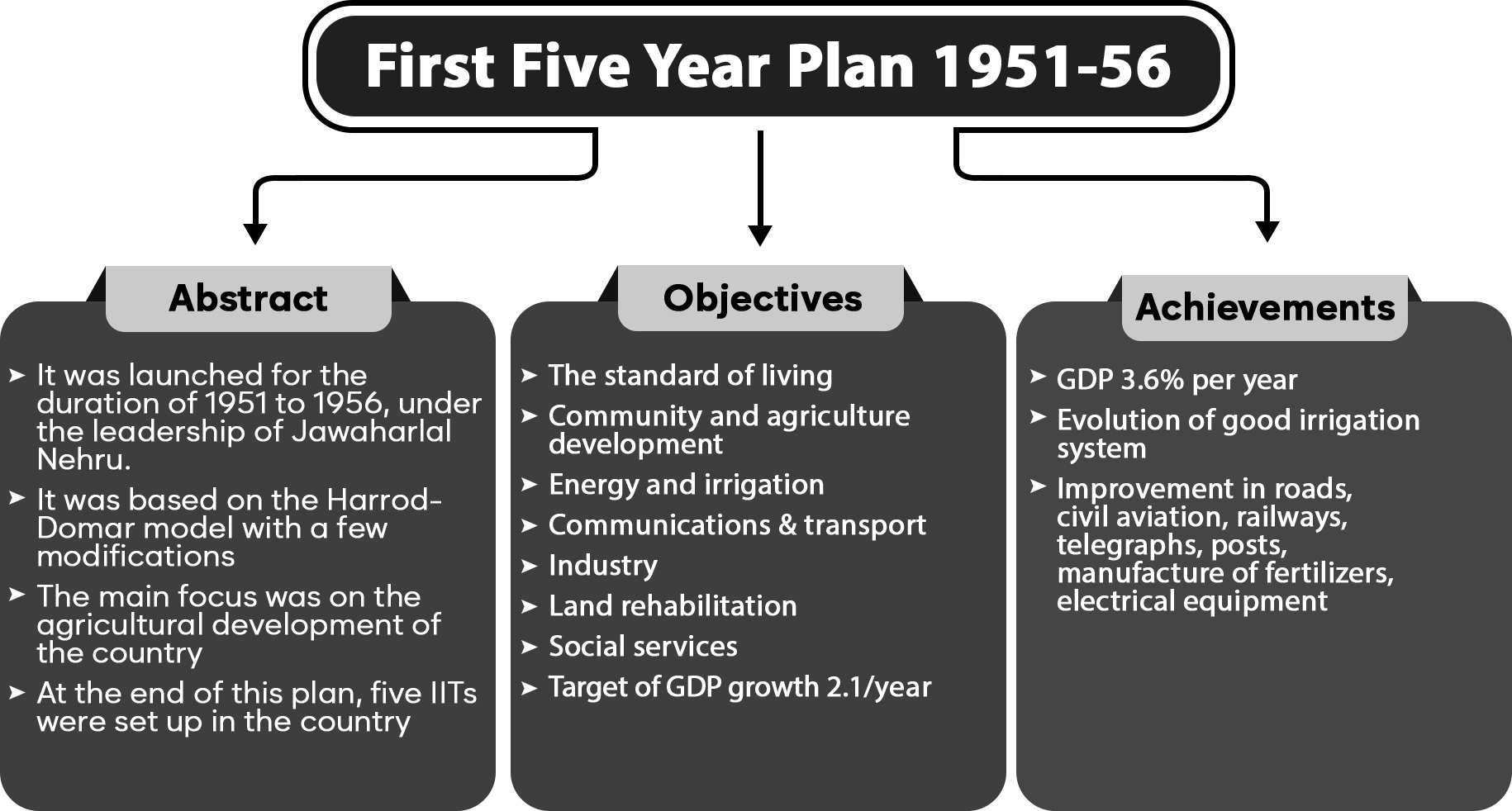
The First Five-Year Plan (1951–1956)
Based on the Harrod-Domar Model and aimed to break India’s cycle of poverty. K.N. Raj, a young economist involved in drafting the plan, advocated for a cautious approach, suggesting that rapid development in the first two decades might threaten the stability of democracy.
The plan focused primarily on the agrarian sector, including significant investments in dams and irrigation systems. The agricultural sector had suffered immensely due to
Partition and needed urgent attention. Large-scale projects, like the Bhakra Nangal Dam, were prioritized and came to symbolize the country’s modernization efforts, often referred to as the “Temples of Modern India” by Jawahar Lal Nehru. The plan identified the unequal distribution of land as a major barrier to agricultural growth and made land reforms a central goal of its strategy.
One of the key aims of the First Five-Year Plan was to increase national income. In the 1950s, India’s spending was at a very low level, so the plan aimed to increase savings. With the planners’ efforts, savings did rise, continuing until the Third Five-Year Plan, though they later declined sharply.